XBuild Go
Phase-aware app, from permit to profit
CLIENT:
Xhome
DURATION:
Feb.2026 - Current
ROLE:
Founding Product Designer;
0-1 Product; Mobile UX
PROBLEM
Your ADU doesn't
end at move-in
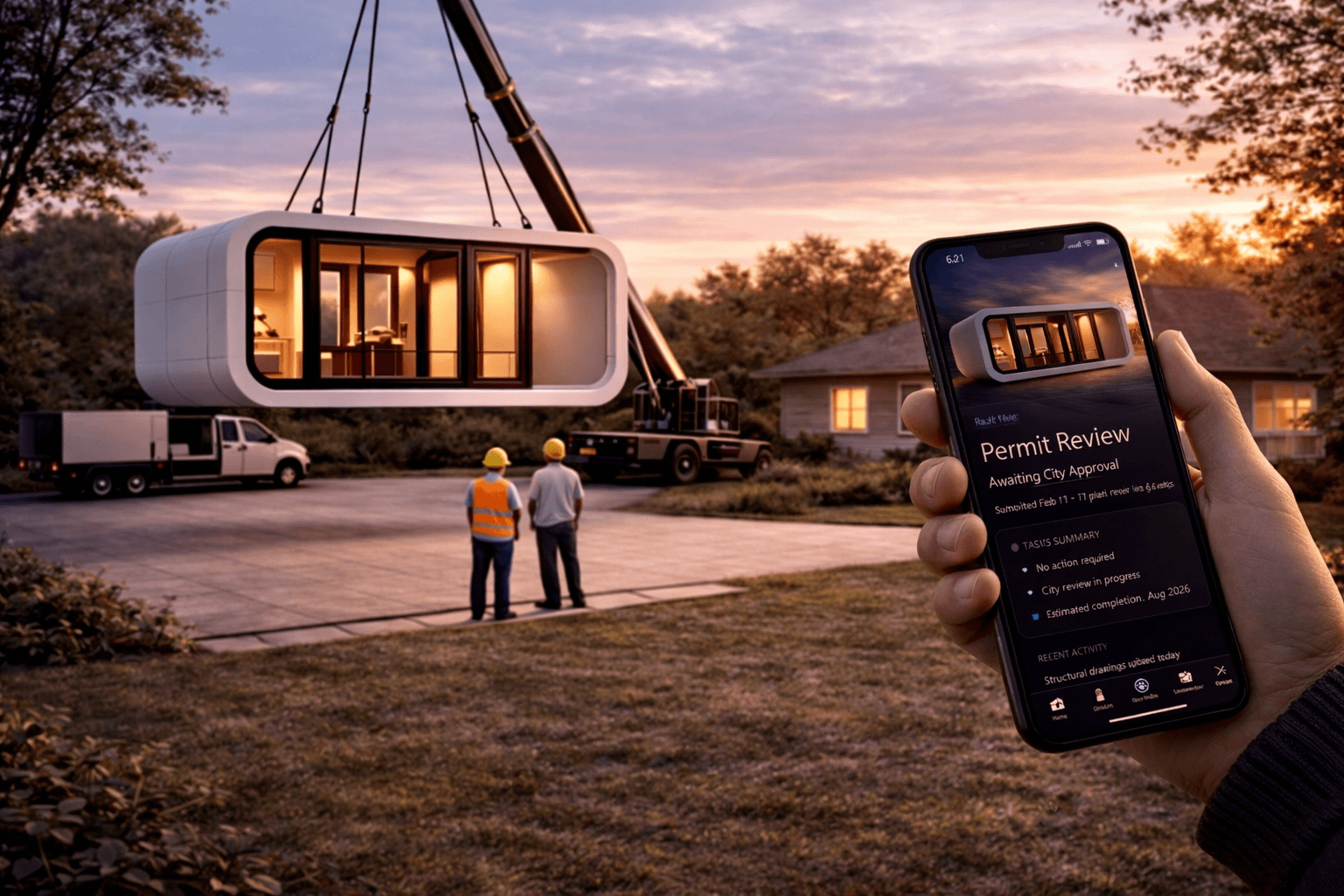
XBuild Go is the mobile companion to the XBuild ADU platform.
Building an ADU and operating one have always been treated as two separate problems, with two separate tools. But the owner lives through both.
An ADU is a living asset; Xbuild Go is built as a single mobile system that adapts as the property moves from development into live operation.
40%
of ADU permits never reach completion
Funding gaps, contractor issues and regulatory complexity cause projects to fall apart.
18 mo
Industry Average ADU delivery timeline
18 months of milestones and decisions, with no dedicated channel keeping the owner informed.
$150K+
Investment with no unified owner view
A six-figure asset managed across spreadsheets and text messages.
77%
of Construction projects experience delays.
Most caused by poor communication between owners and builders. Owners left waiting.
USER INSIGHT
Same asset.
Different realites.
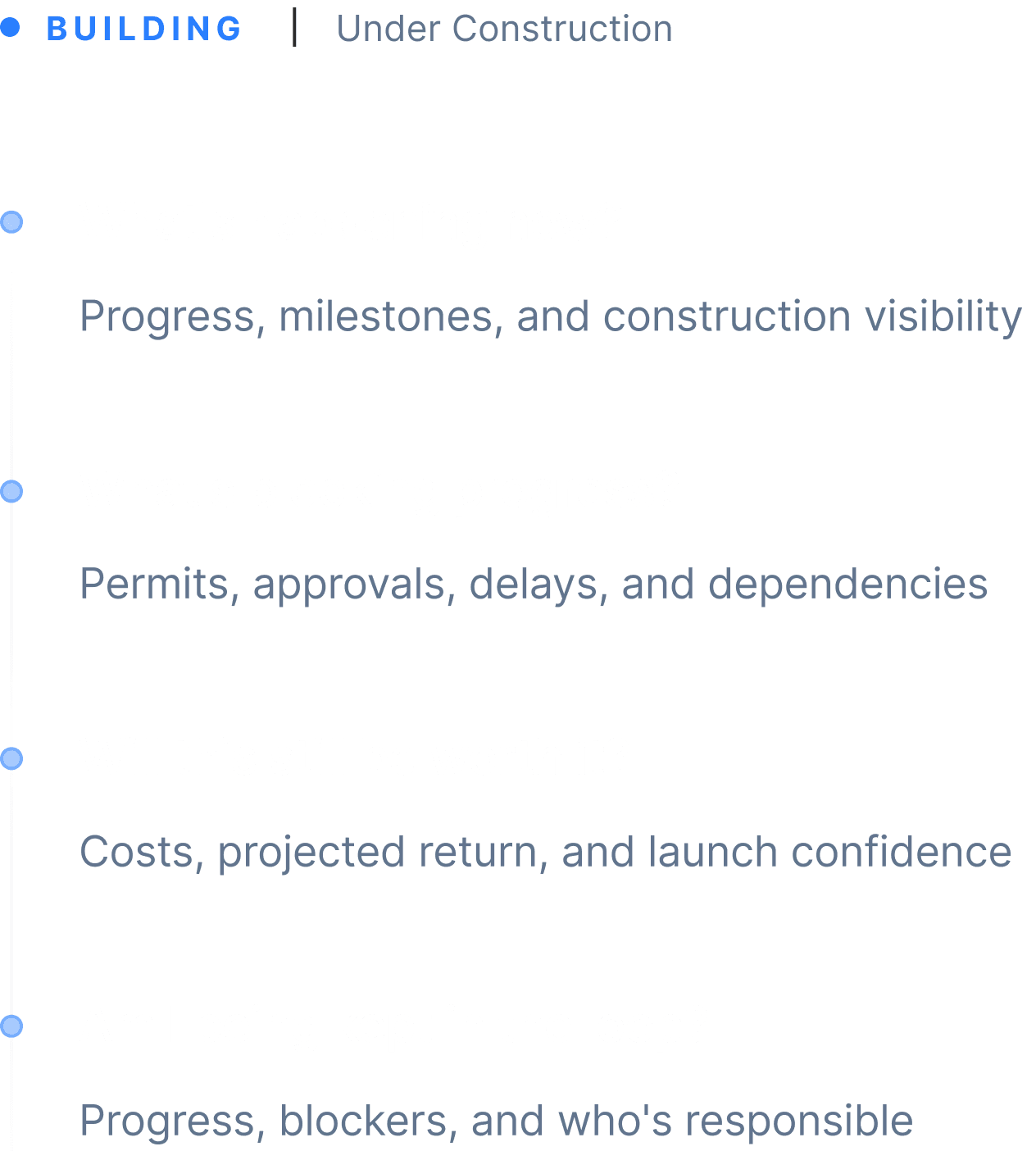
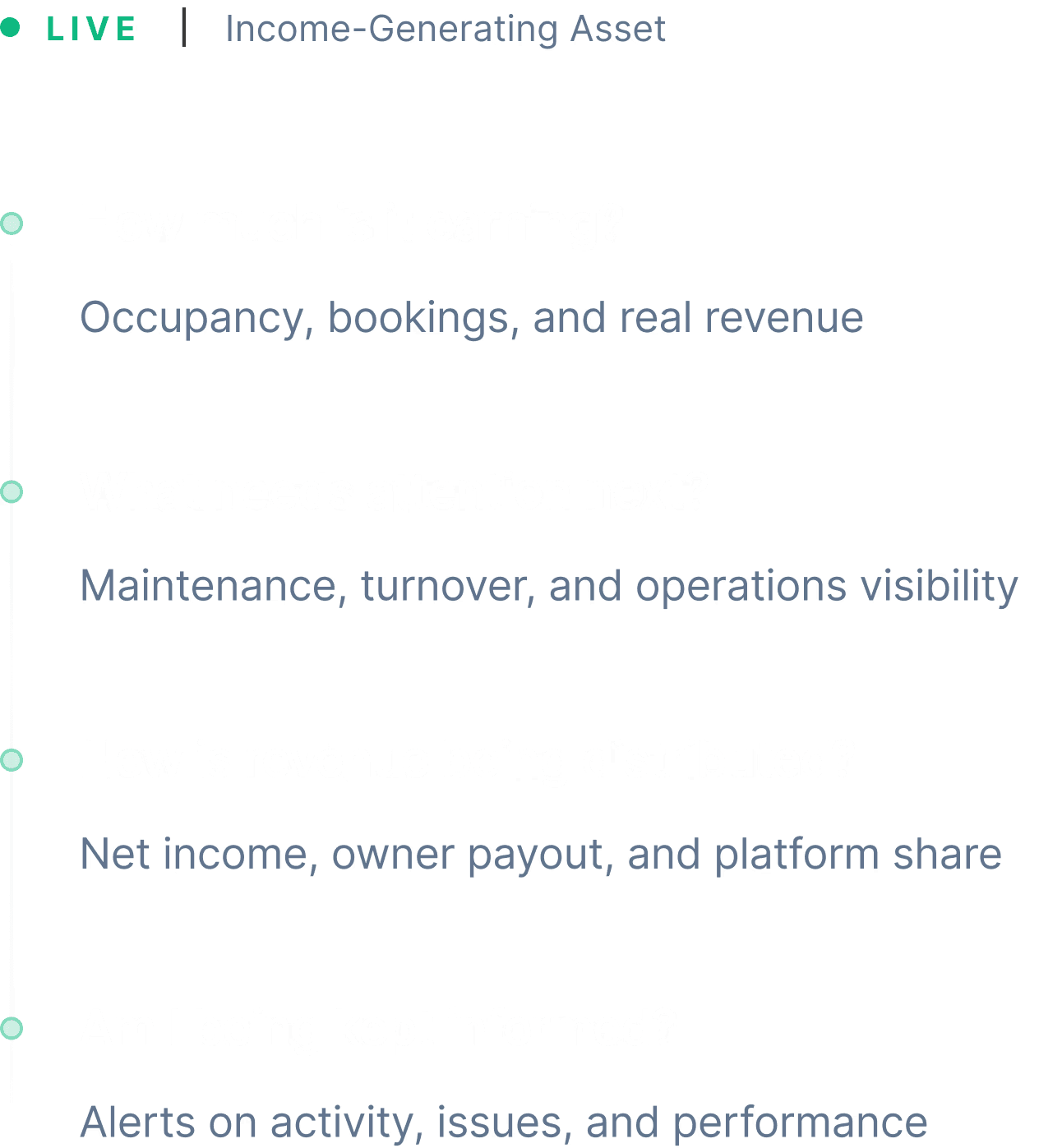
The same asset moves through two different realities: Building and Live.
The interface needed to stay familiar, even as the owner’s priorities changed.
DESIGN FRAMEWORK
Two modes.
One app.
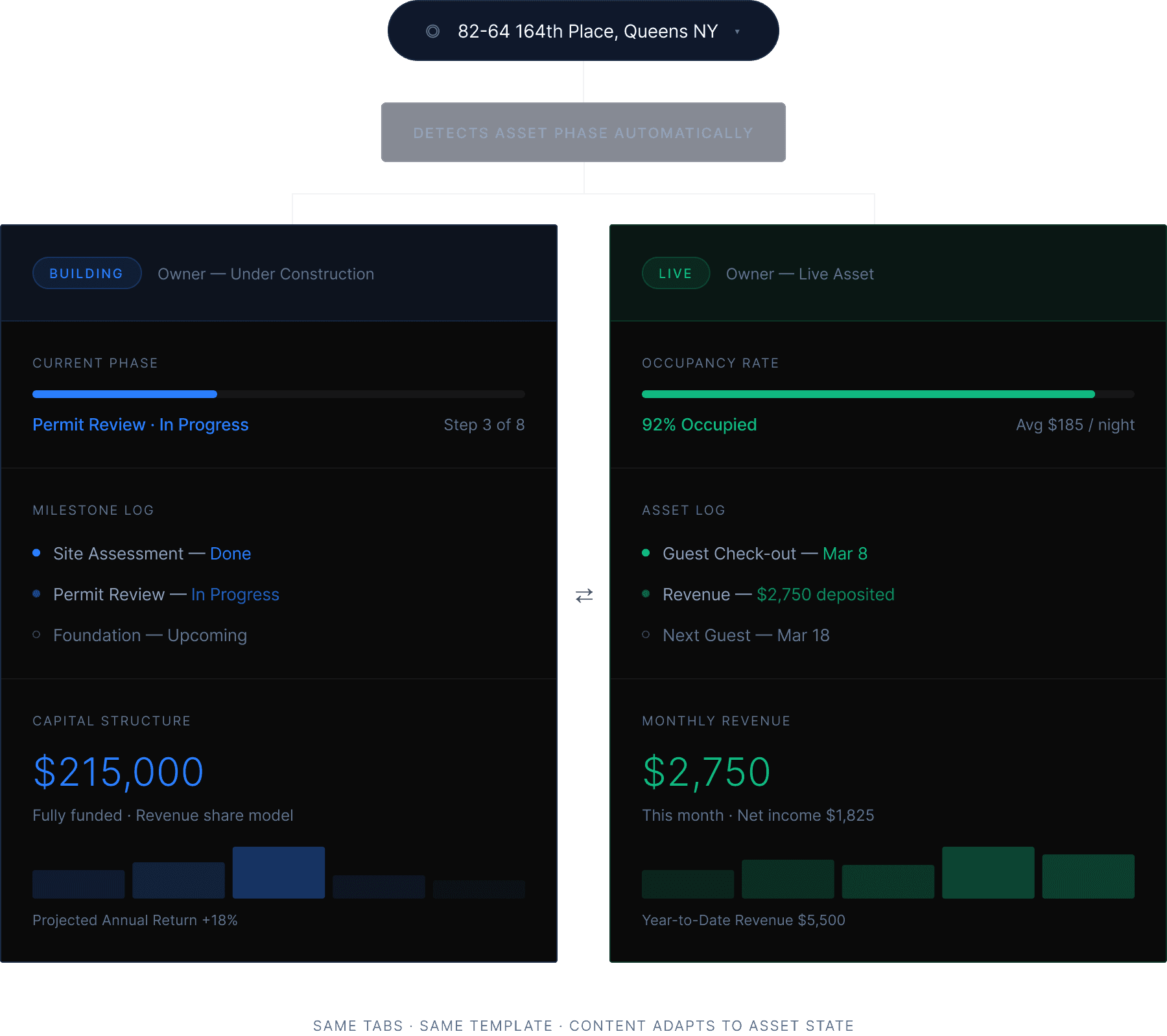
The address selector is the only trigger. The system detects each property's phase automatically: no mode switching, no separate interfaces. The same structure adapt, rendering different content based on the asset's lifecycle.
DESIGN PROCESS
From observation
to system
XBuild Go started not from a brief, but from an observation.
As the founding designer, I proposed one continuous system, not two separate apps. It understands where each property is, and shows the owner exactly what matters right now.

01 HOME
From Build Status
to Live Performance
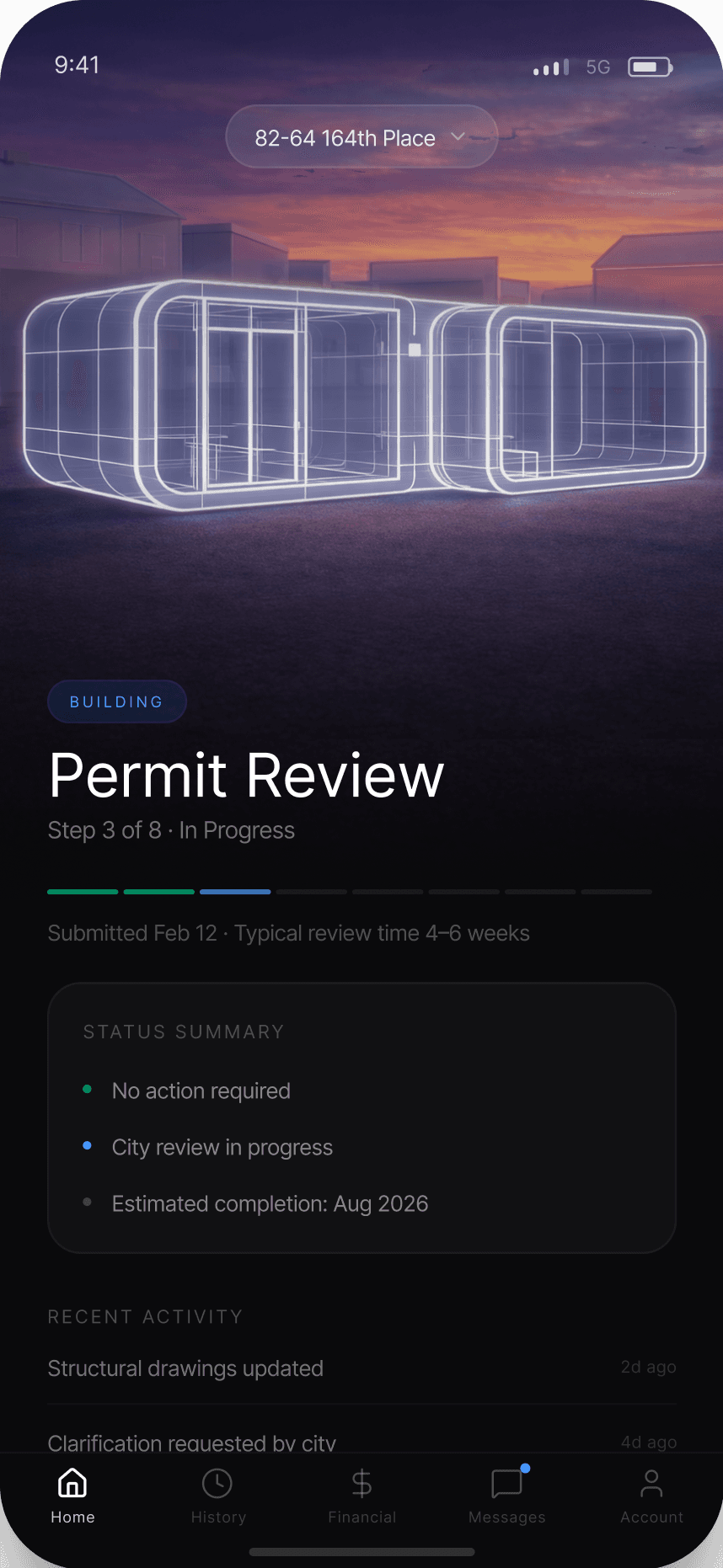
BUILDING
Designed for clarity
while the asset is still taking shape.
During construction, owners are not looking for “performance” — they are looking for orientation. The Home screen prioritizes phase status, blockers, and next steps so the project feels understandable even when progress is uneven.
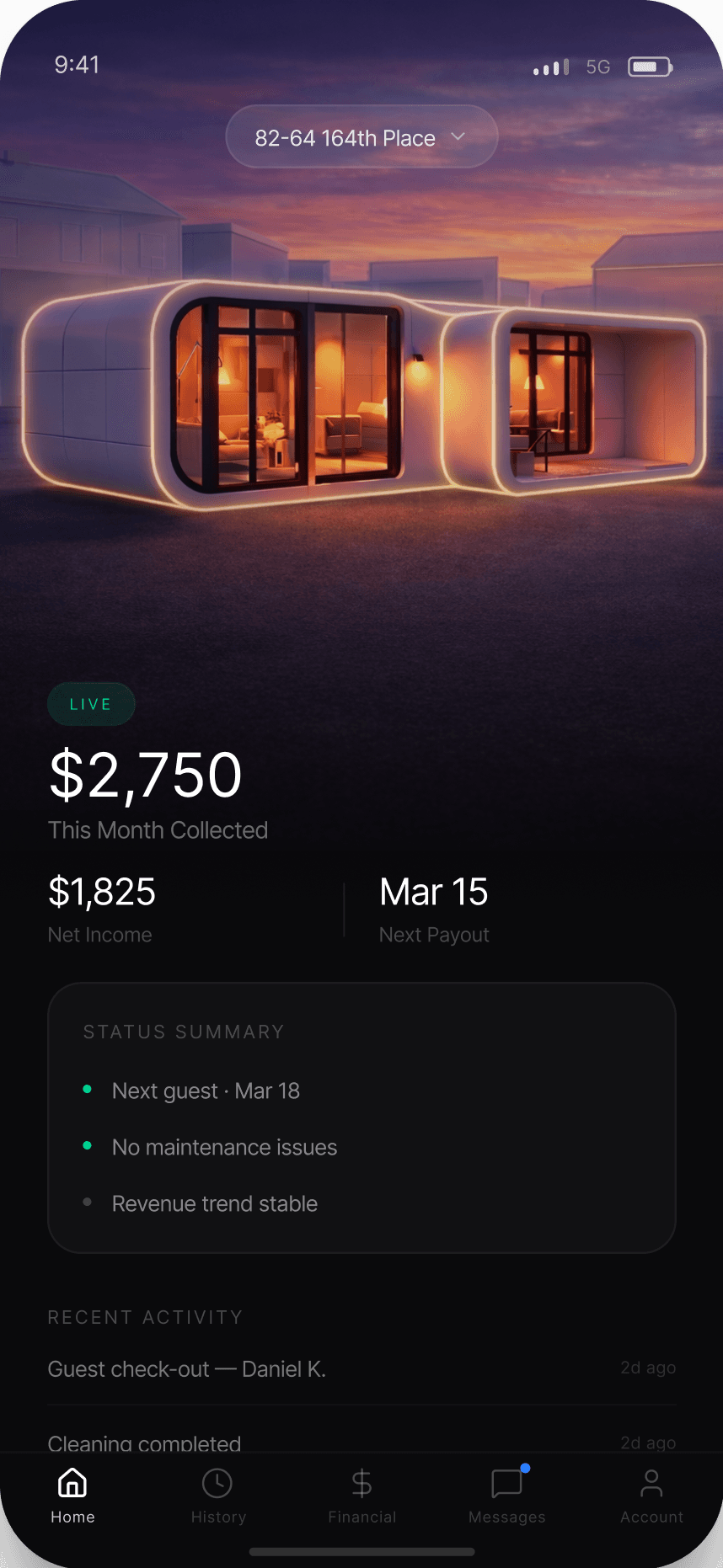
OPERATING
Designed for clarity
Once the asset becomes real.
Once the unit goes live, the owner’s focus shifts from following progress to understanding performance. The Home experience resolves with the asset itself, evolving from an abstract, in-progress state into a fully realized, operating unit.
02 HISTORY
From Milestone Log
to Operational Record
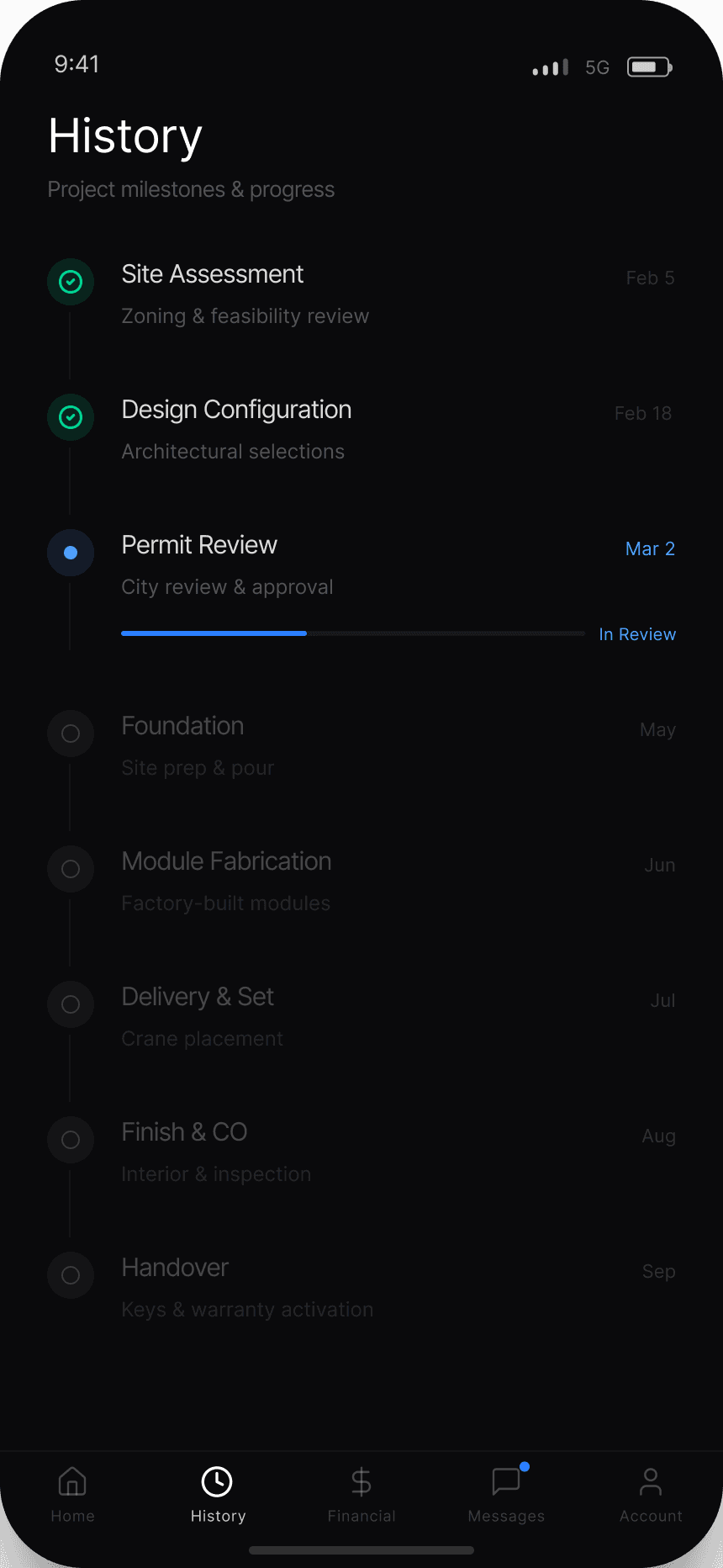
BUILDING
Structured as a timeline
to make progress visible.
Construction doesn’t unfold all at once. History turns scattered updates into a clear sequence of milestones, so owners can understand how the project is progressing over time.
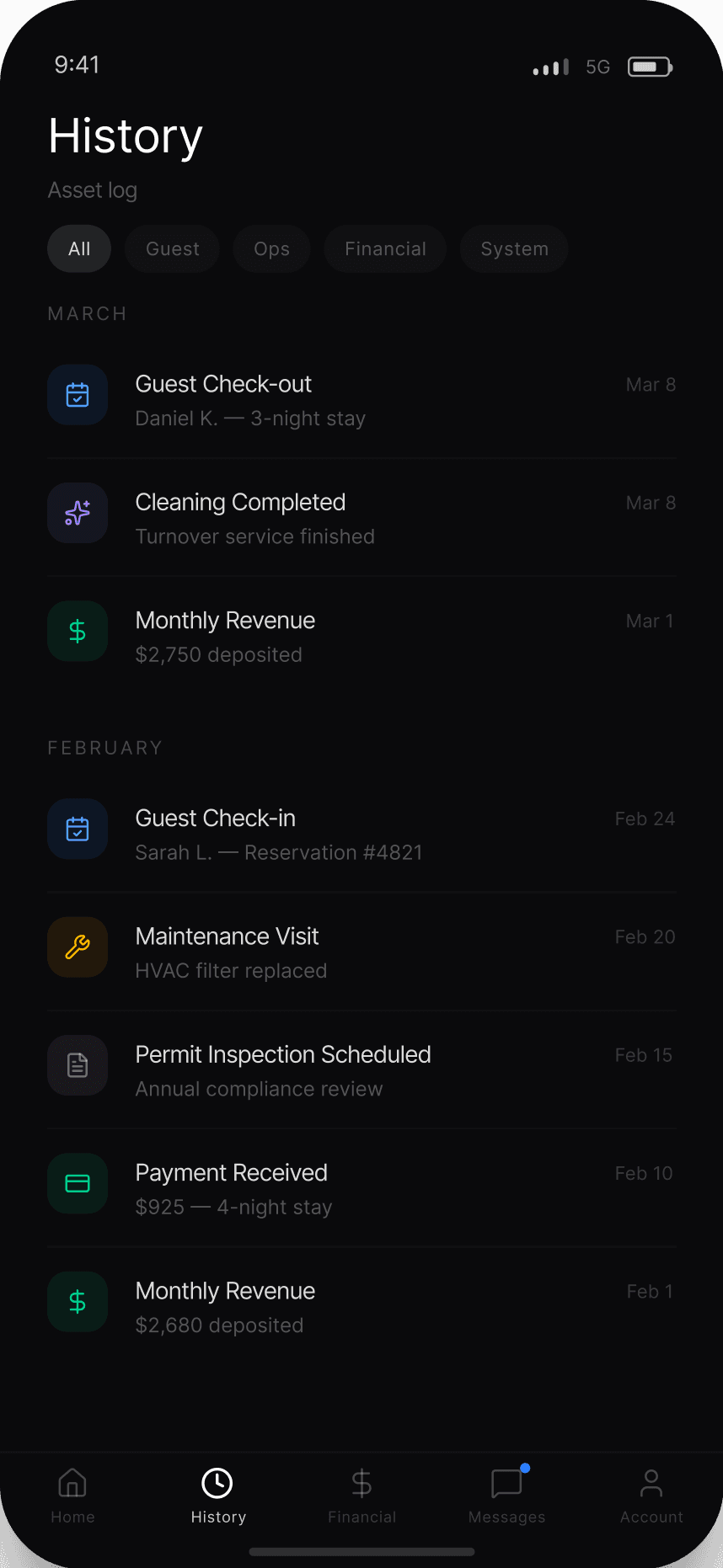
OPERATING
Structured as a timeline
to preserve what happened.
Once the unit is live, the need shifts from tracking progress to retaining events.
History becomes an operational log — capturing activity, revenue, and issues so the asset’s life remains traceable.
FINANCIAL
From Financial Status
to Actual Earnings
BUILDING
Built around structure
before revenue begins.
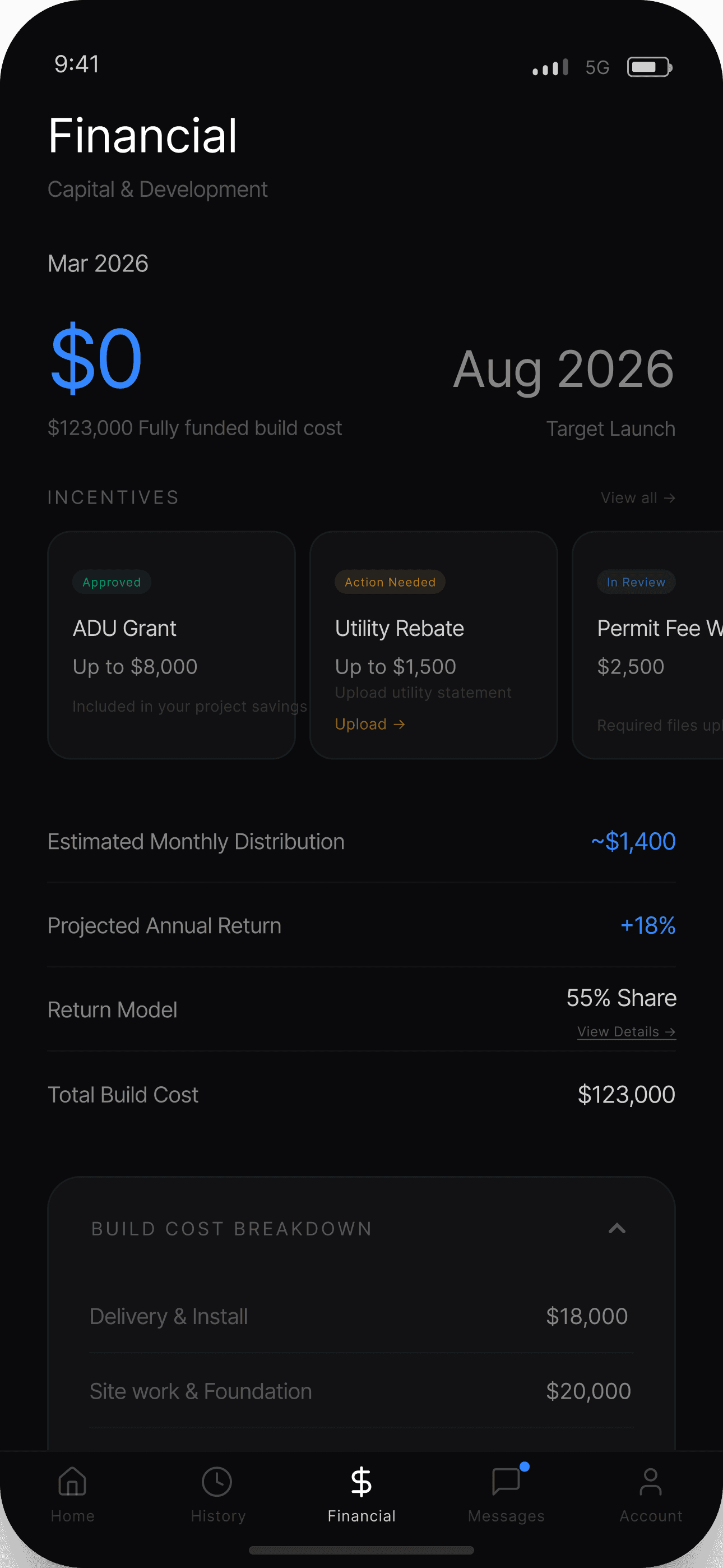
Before the unit is live, financial understanding is about structure rather than performance. This screen surfaces build cost, incentive status, launch timing, and return model, giving the owner a clear view of how the asset is financially set up.
OPERATING
Built around performance
once the asset is operating.
Once the unit is live, financial understanding shifts from setup to outcome.
The screen reorganizes around actual earnings, occupancy, expenses, and distribution, making the asset’s performance legible over time.

REFLECTION
What's different about designing for a lifecycle, not a task.
Phase-awareness is a structural decision, not a UI pattern
The hardest part wasn't designing two modes — it was resisting the temptation to show both at once. Every screen had to earn its place in exactly one phase. That constraint made the product more focused, not less powerful.
Mobile changes what "trust" means
On the ADU web platform, users browse and decide. On Go, owners check and monitor. The mobile context meant trust wasn't built through information volume — it was built through return visits, consistent data, and knowing who to call. That changed every information hierarchy decision.
Financial transparency beats financial advice
Owners didn't want the app to tell them what to do. They wanted to see their own numbers clearly — capital structure, projected return, monthly net income — in language that matched how they thought about their investment. Legibility, not recommendation, was the design goal.