XBuild
ADU Decision Engine

Most homeowners want to build an ADU. Most never start.
Accessory Dwelling Units (ADUs) have become a critical housing solution in the United States, driven by housing shortages and evolving family structures. Many states have expanded ADU-friendly policies, yet most homeowners never move beyond early interest.
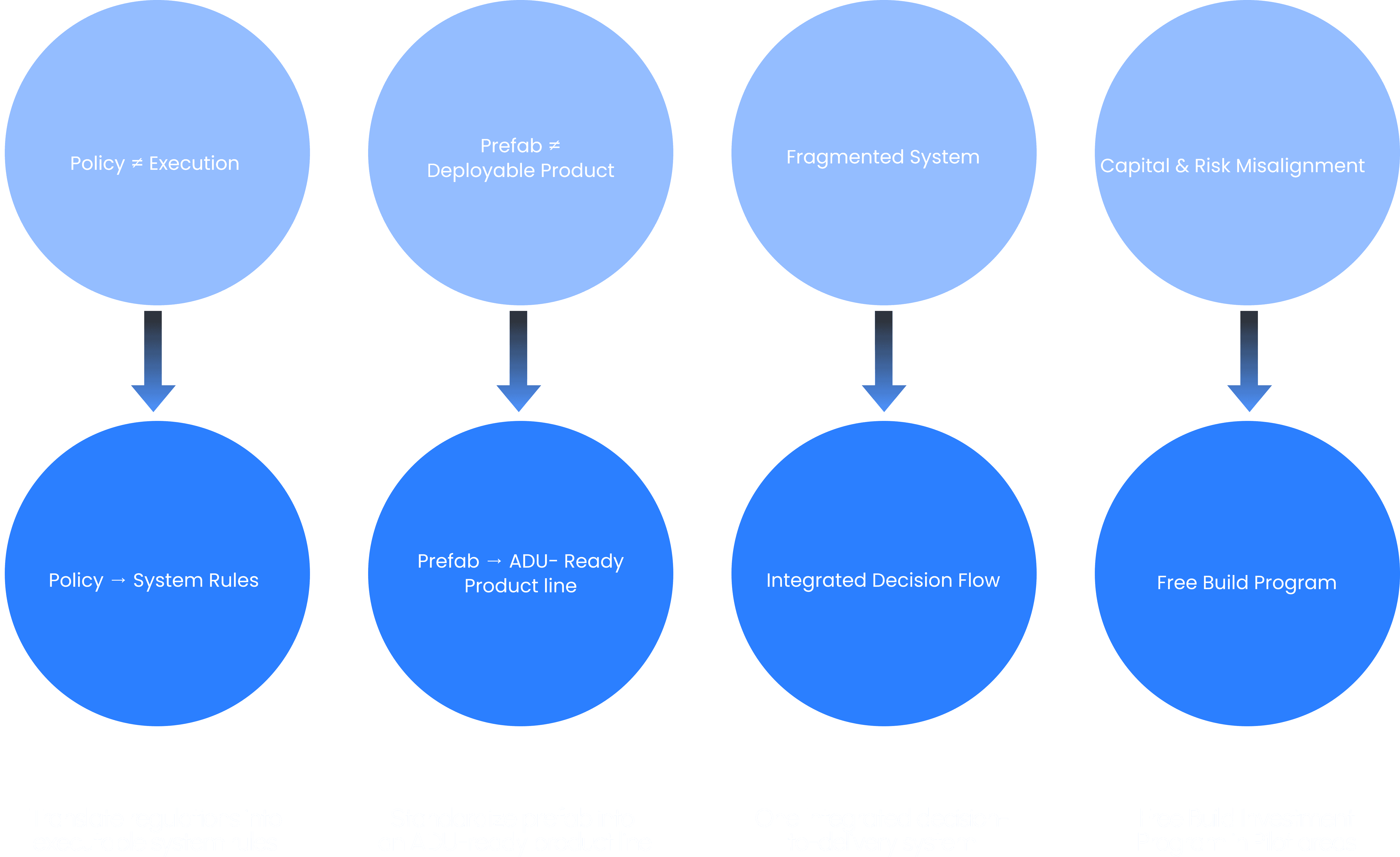
The challenge is not design, it is navigating uncertainty across regulation, finance, and risk. XBuild reframes ADUs as a deployable, decision-driven product system.
Project Timeline

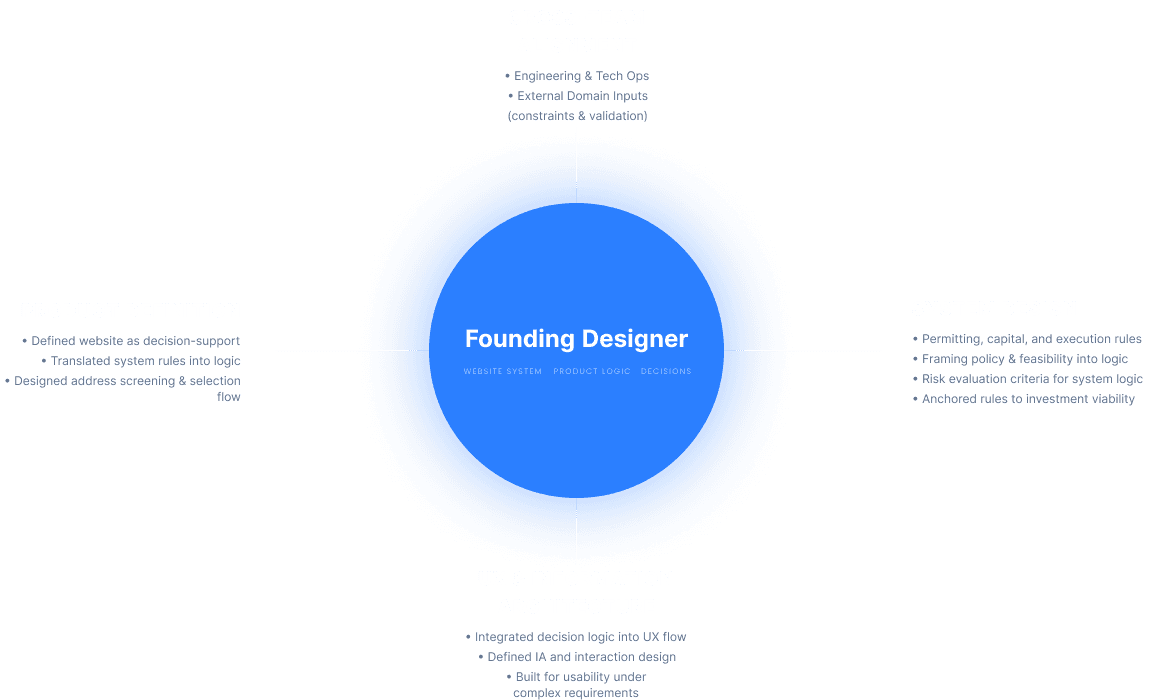
Team Role
Market Discovery
ADU Policy Landscape
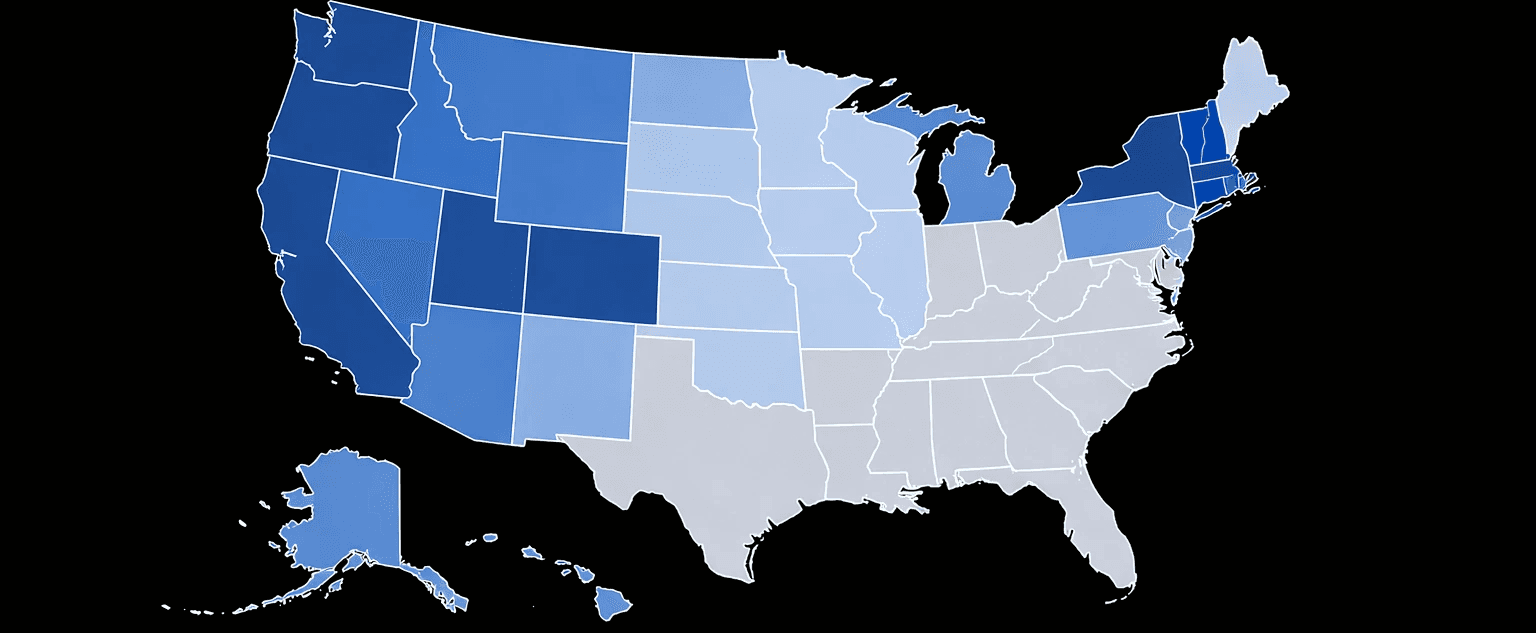
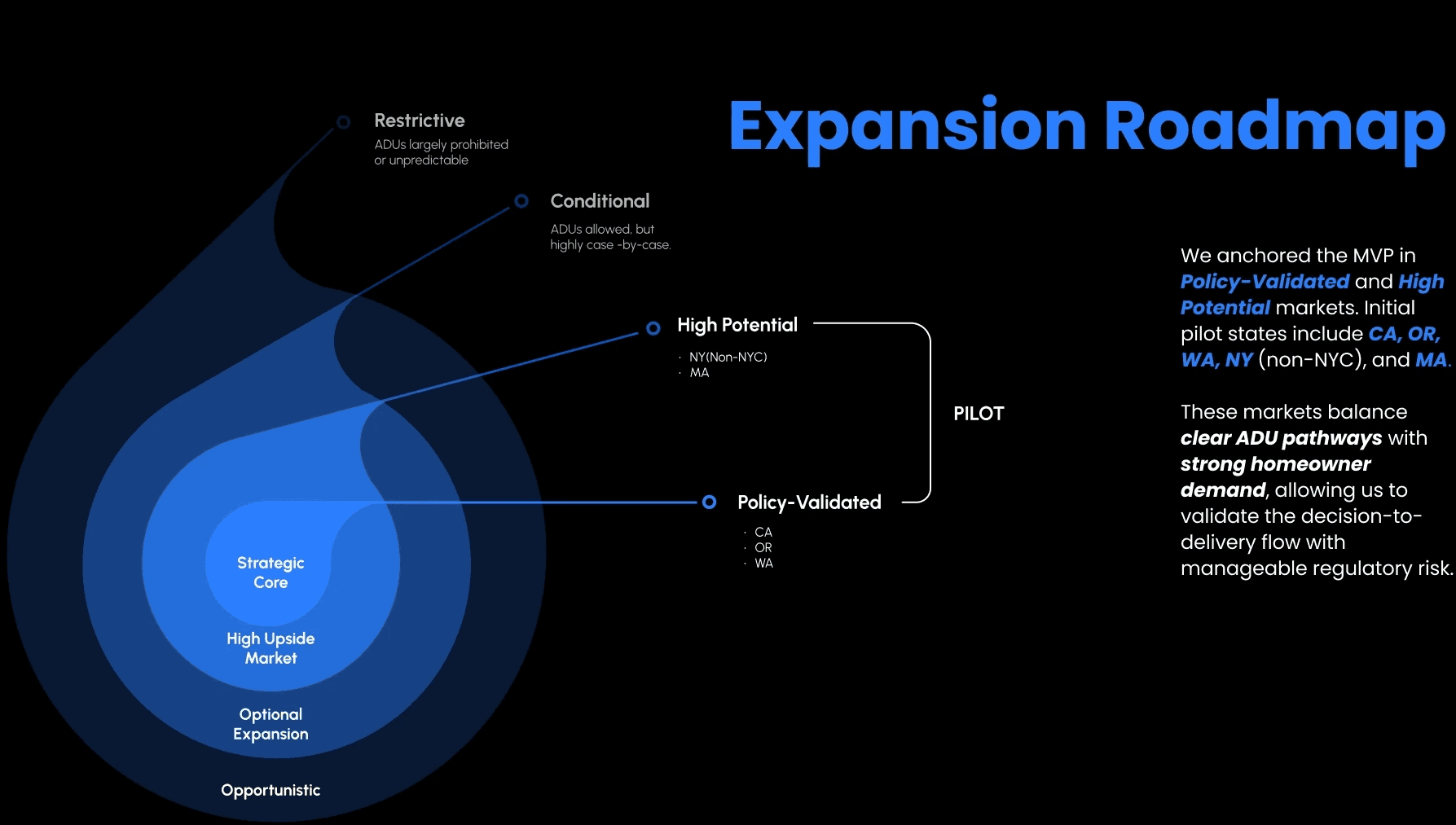
Policy-Validated
High-Potential
Conditional
Restrictive
Research
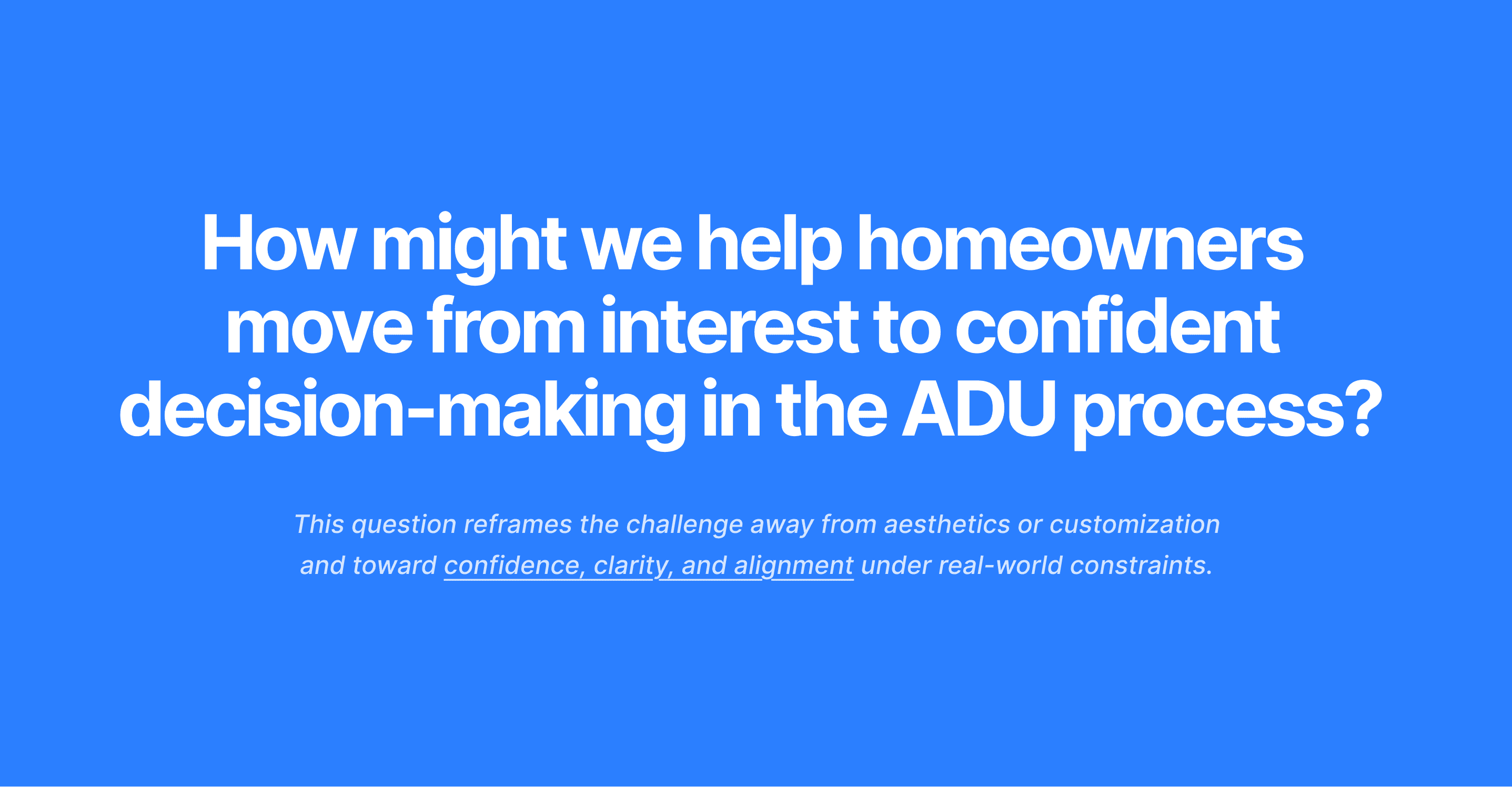
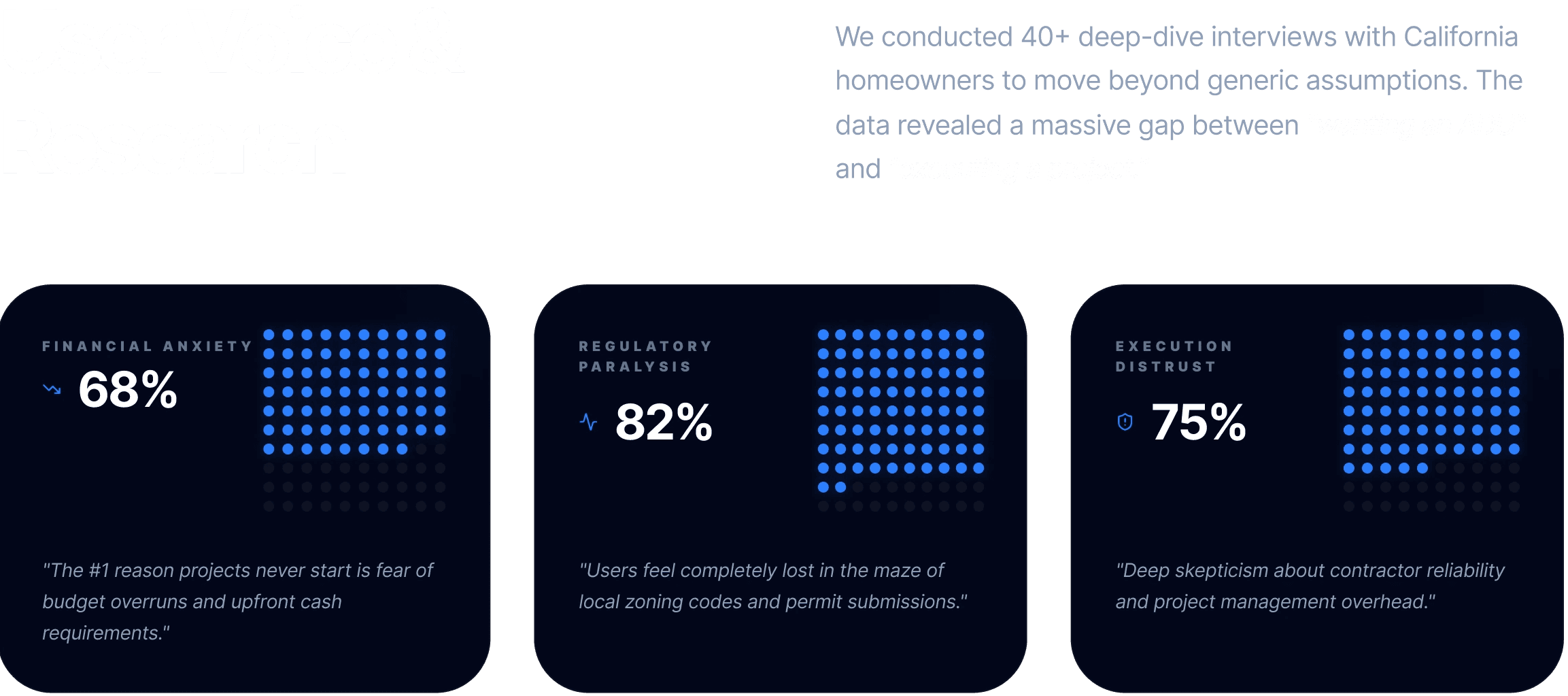
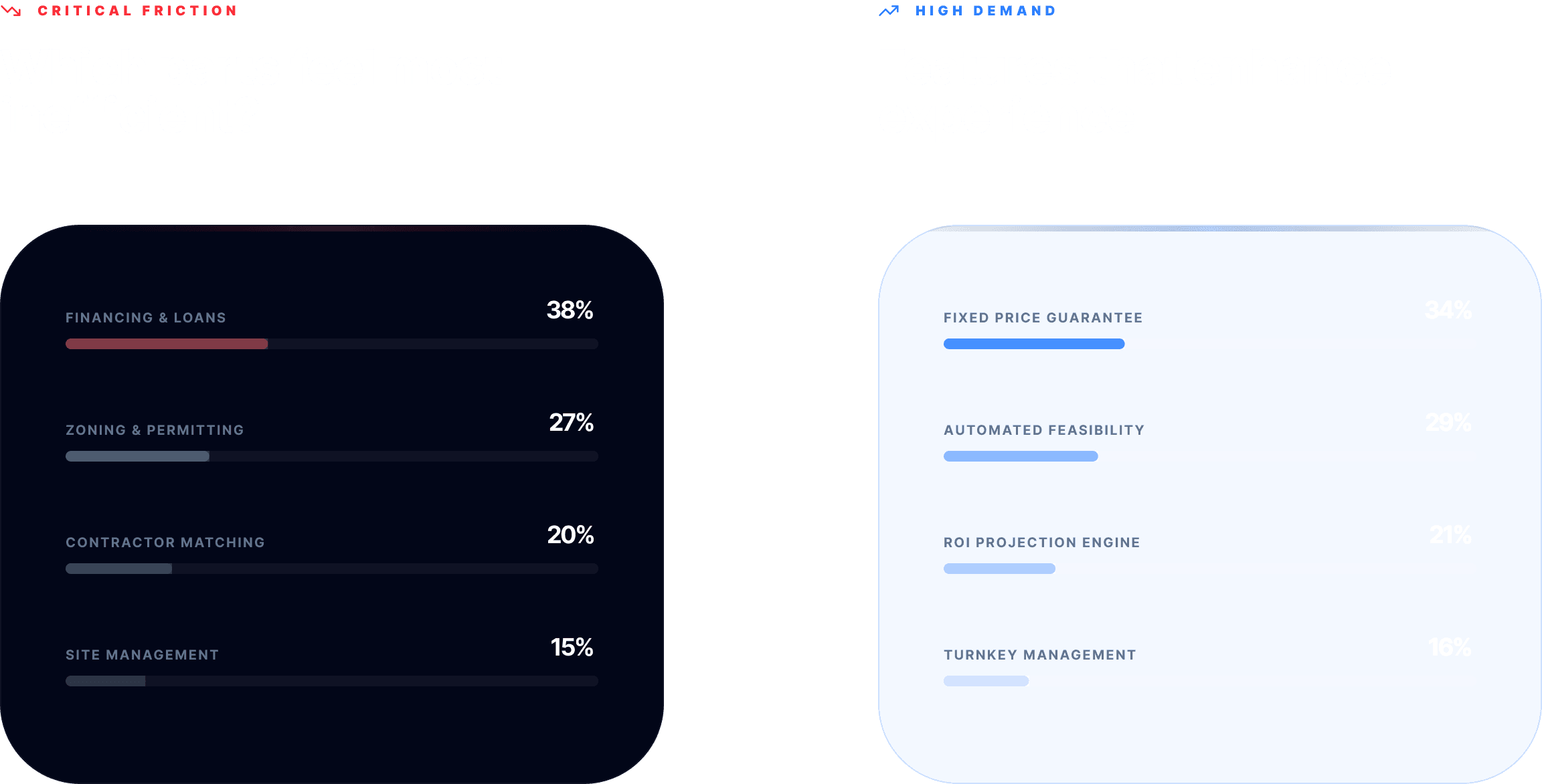
User-Level Friction
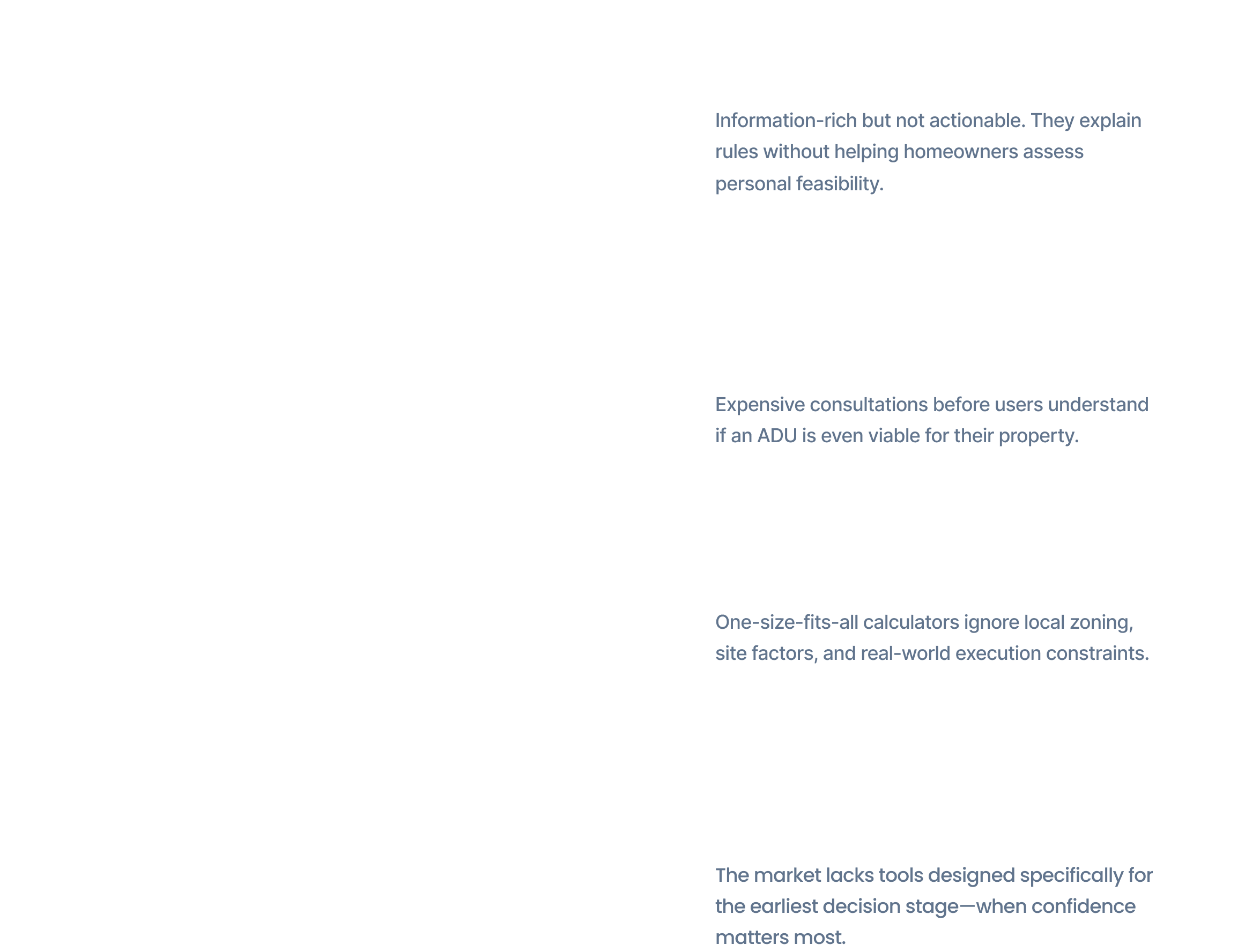
System-Level Breakdown
System-Level Breakdown
Personas
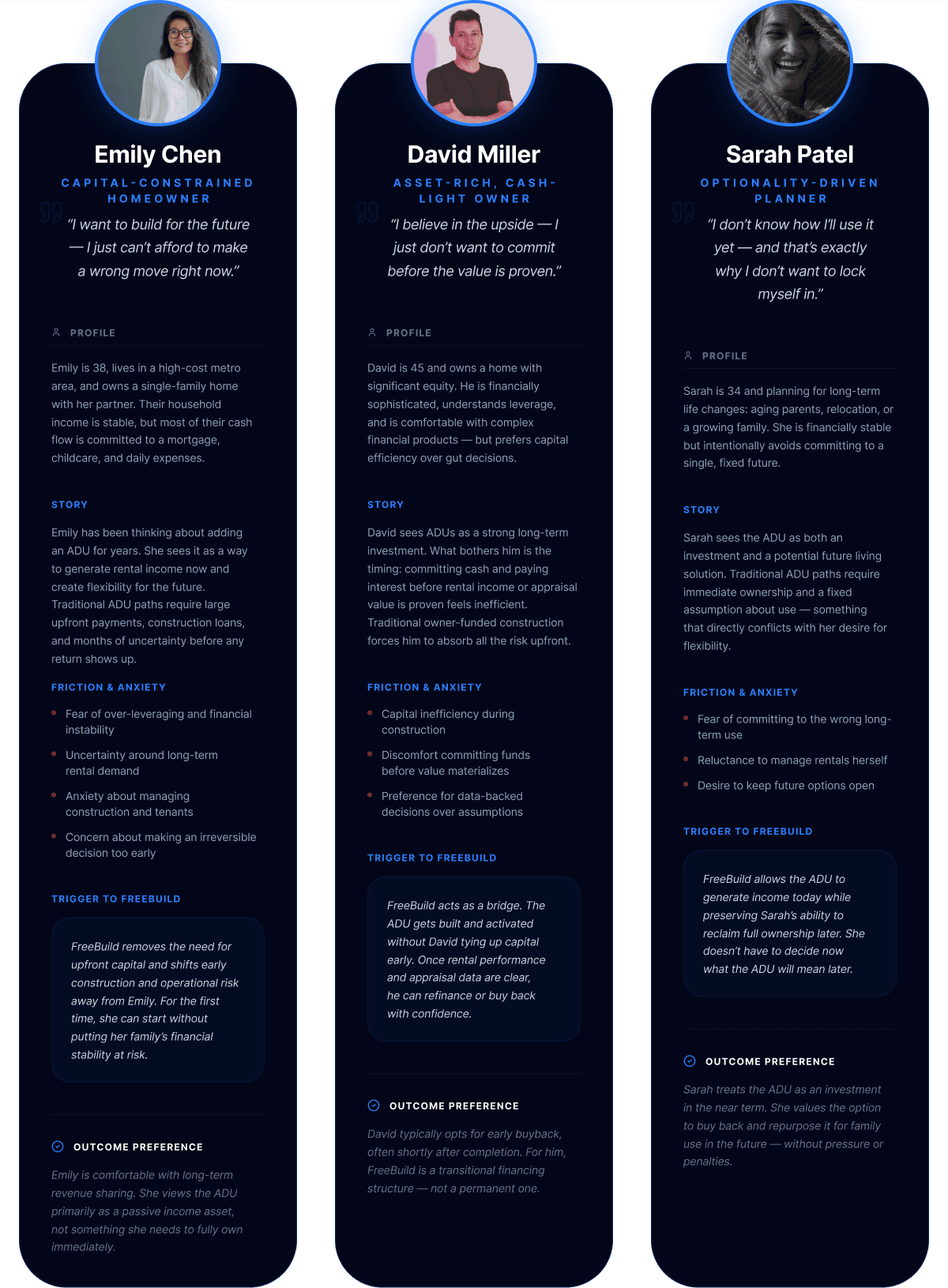
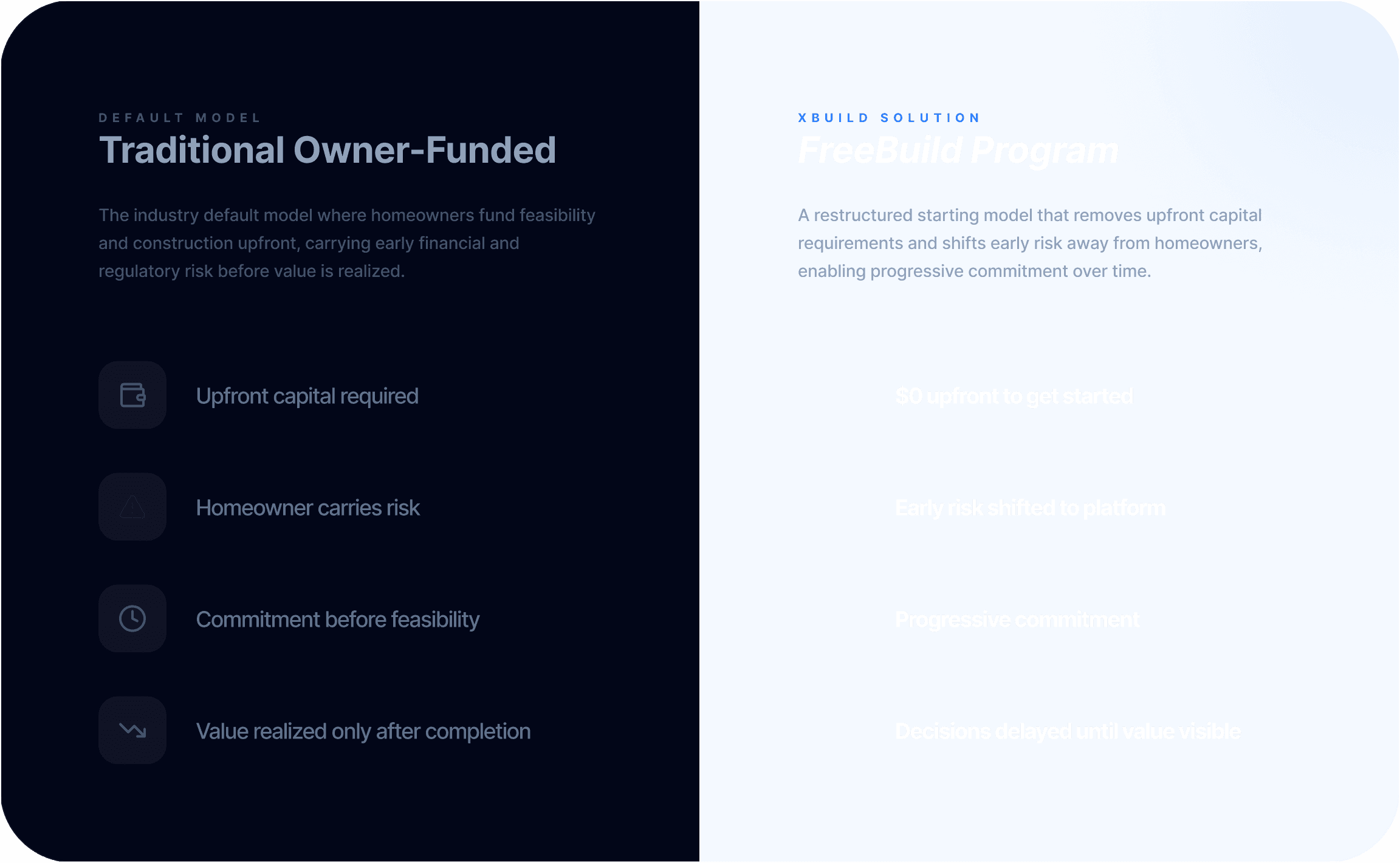
FreeBuild: Restructuring ADU Path
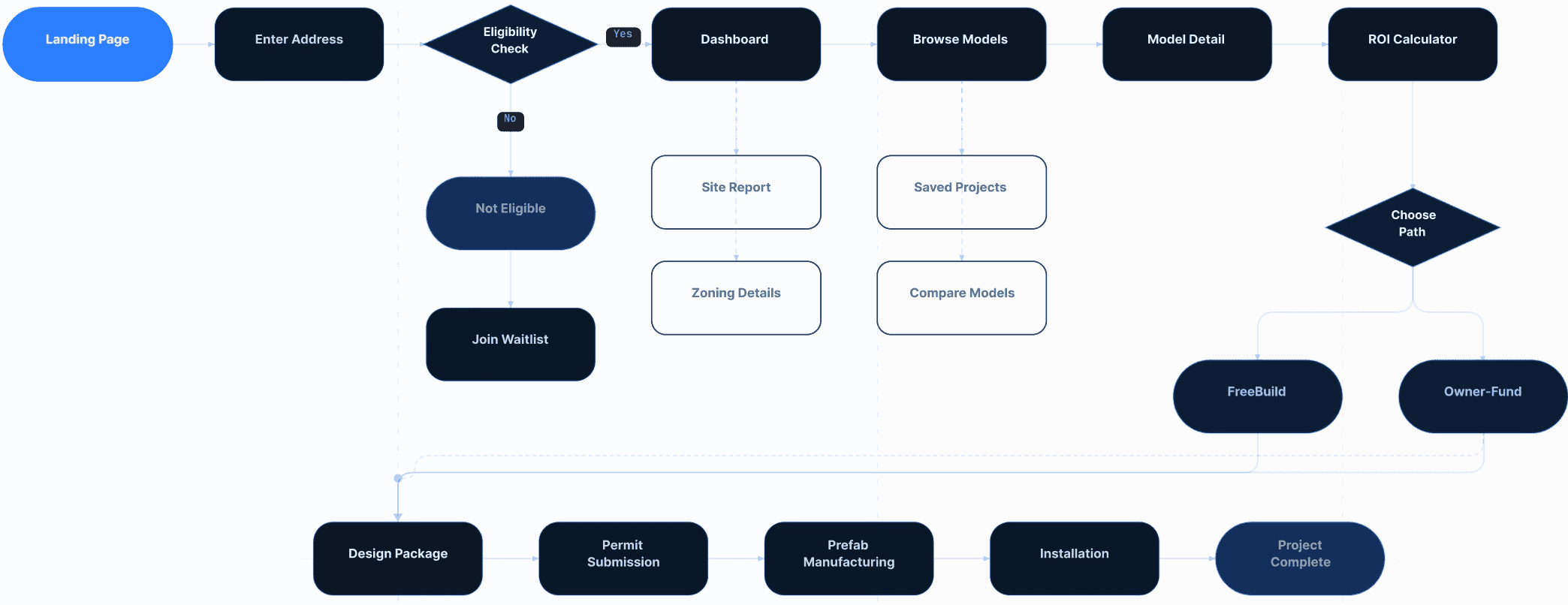
User Flow
End-to-end homeowner journey from address input through eligibility,
model selection, path decision, and shared execution pipeline.
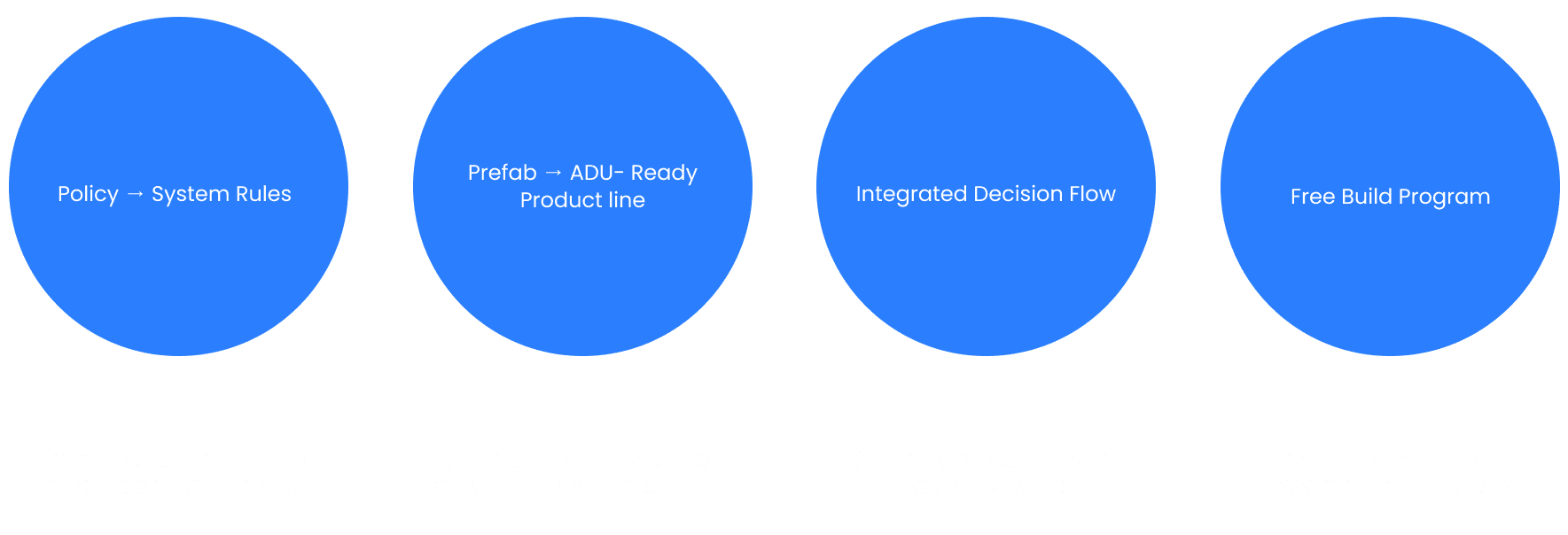
MVP Scope
Policy as code. Prefab as product. Decision to delivery, integrated.

Design
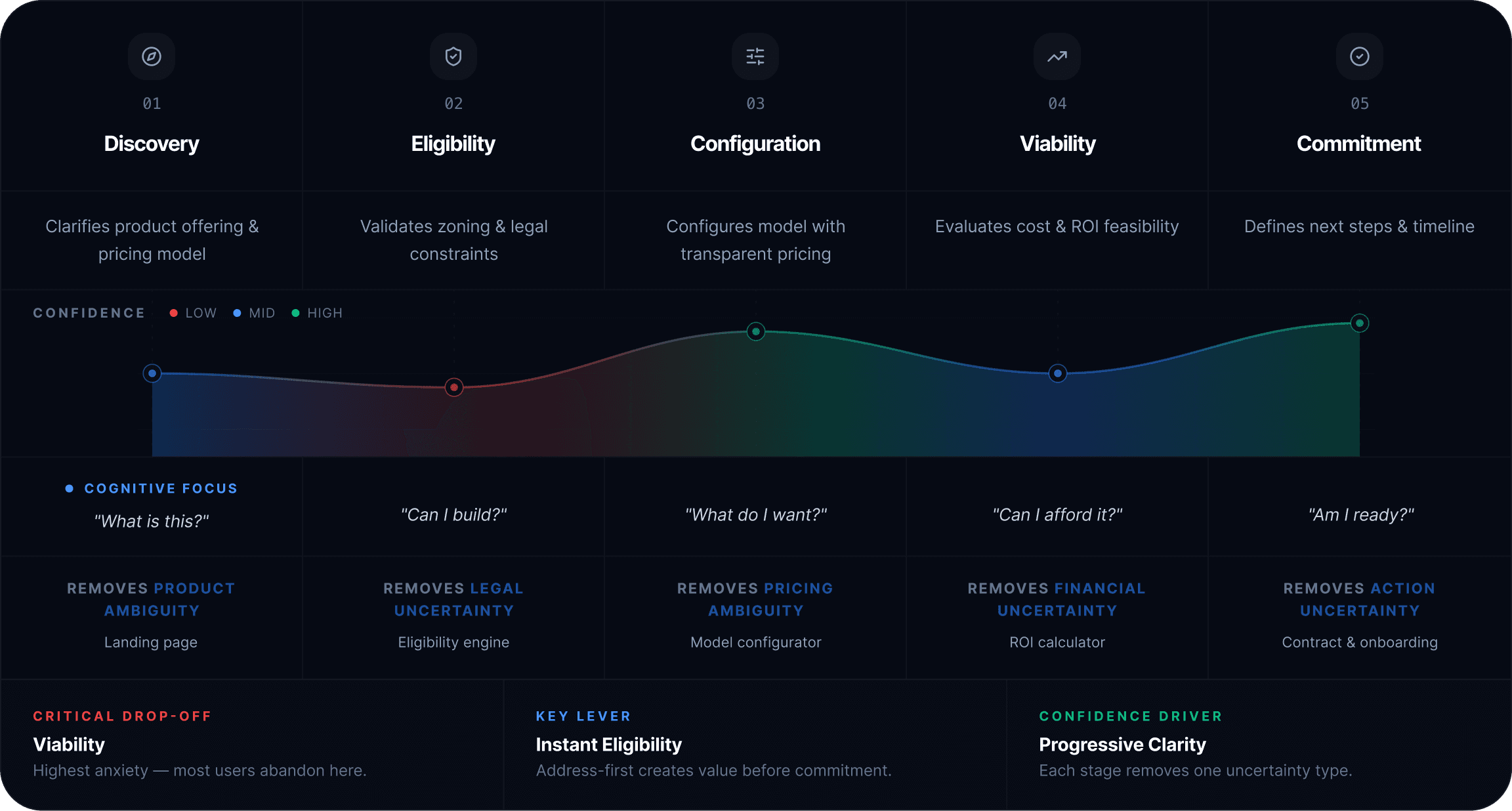
User Journey Map
Five structured decision phases, from initial discovery to final commitment;
each progressively removing a different type of uncertainty.
05 ADU Project Transparency
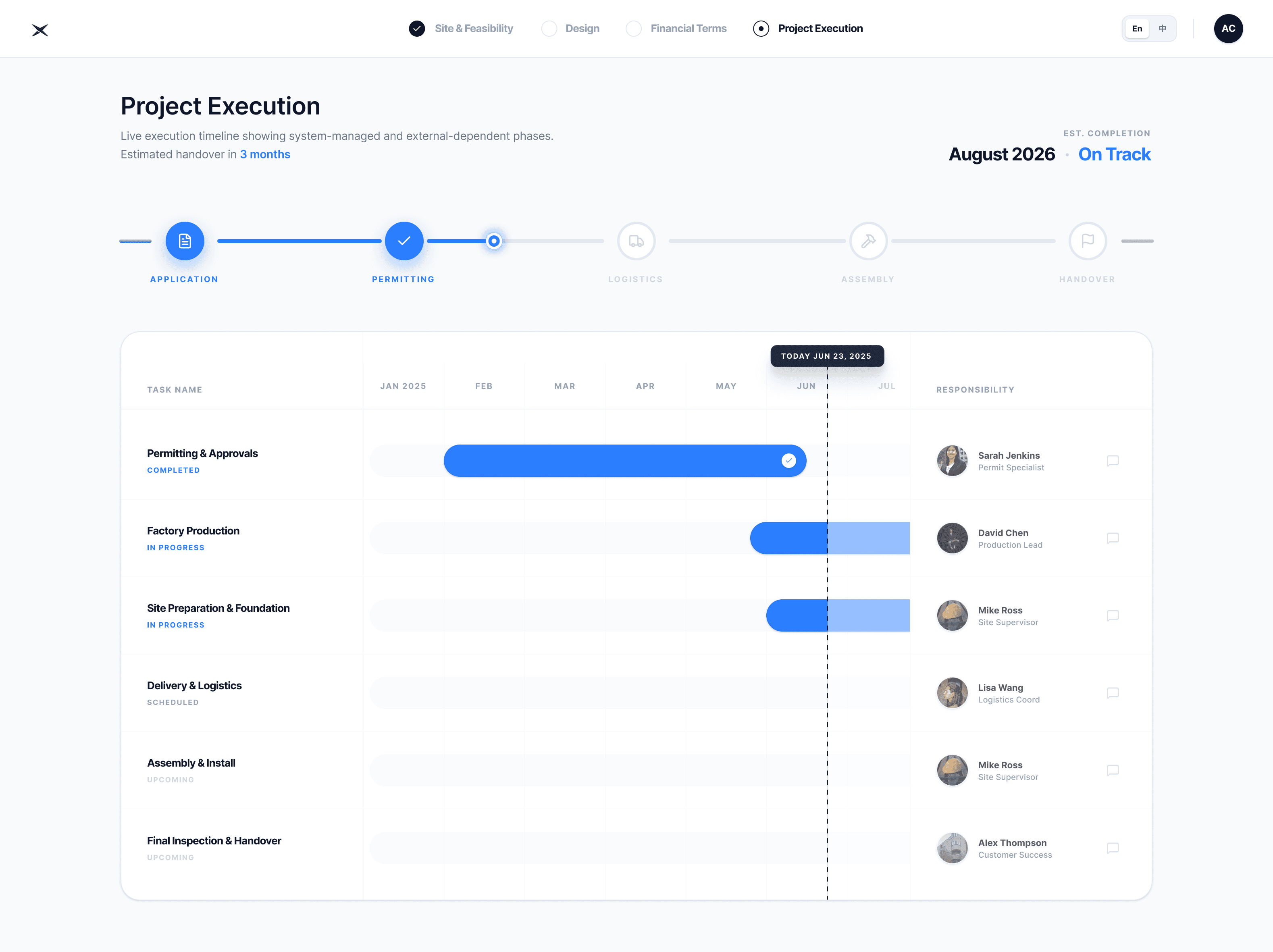
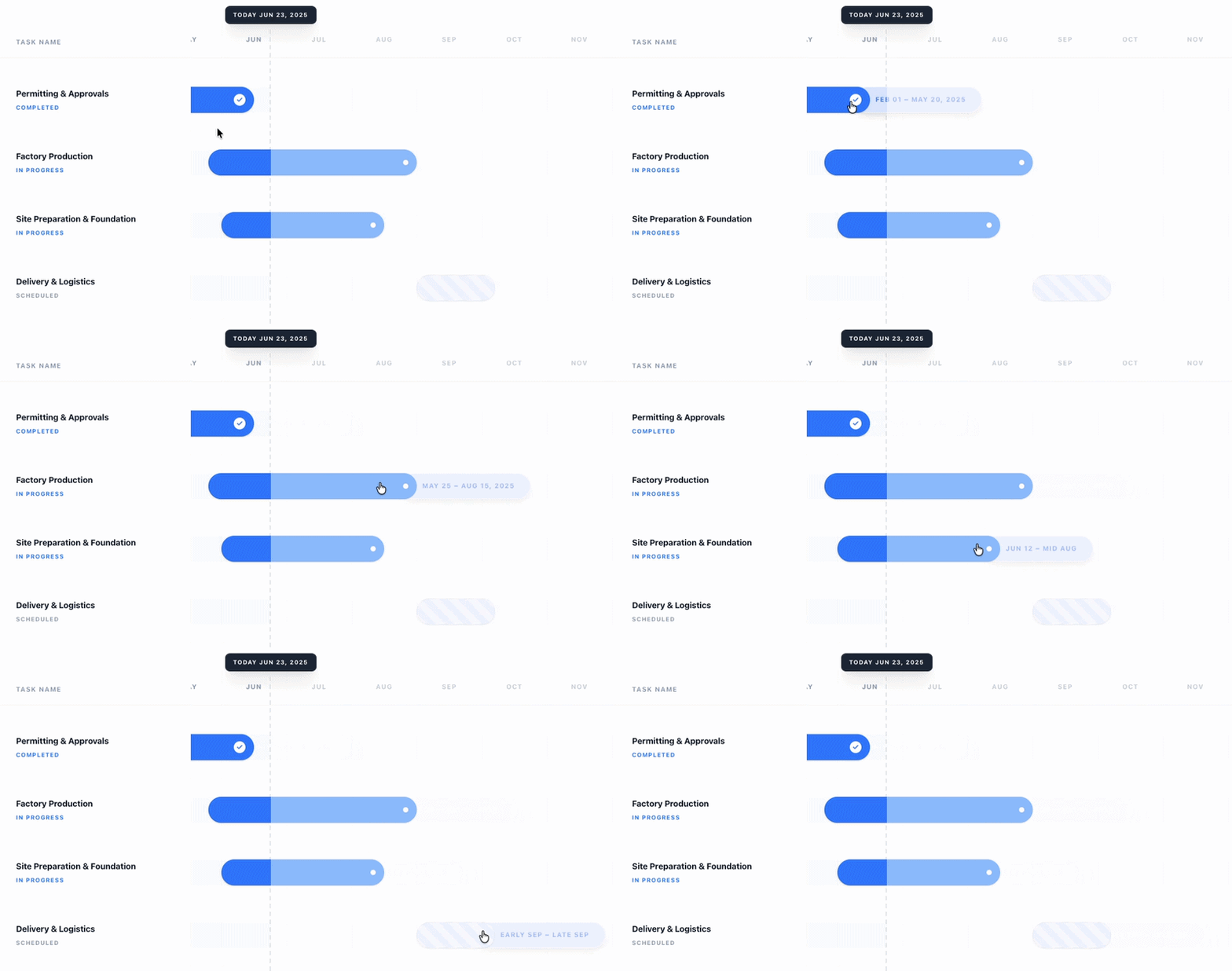
A live, phase-based timeline that translates planning into accountable delivery.
• End-to-end visibility across permitting, production, logistics, and installation
• Real-time status tracking with milestone confirmation
• Clear ownership and responsibility assignment
• Predictable completion forecasting
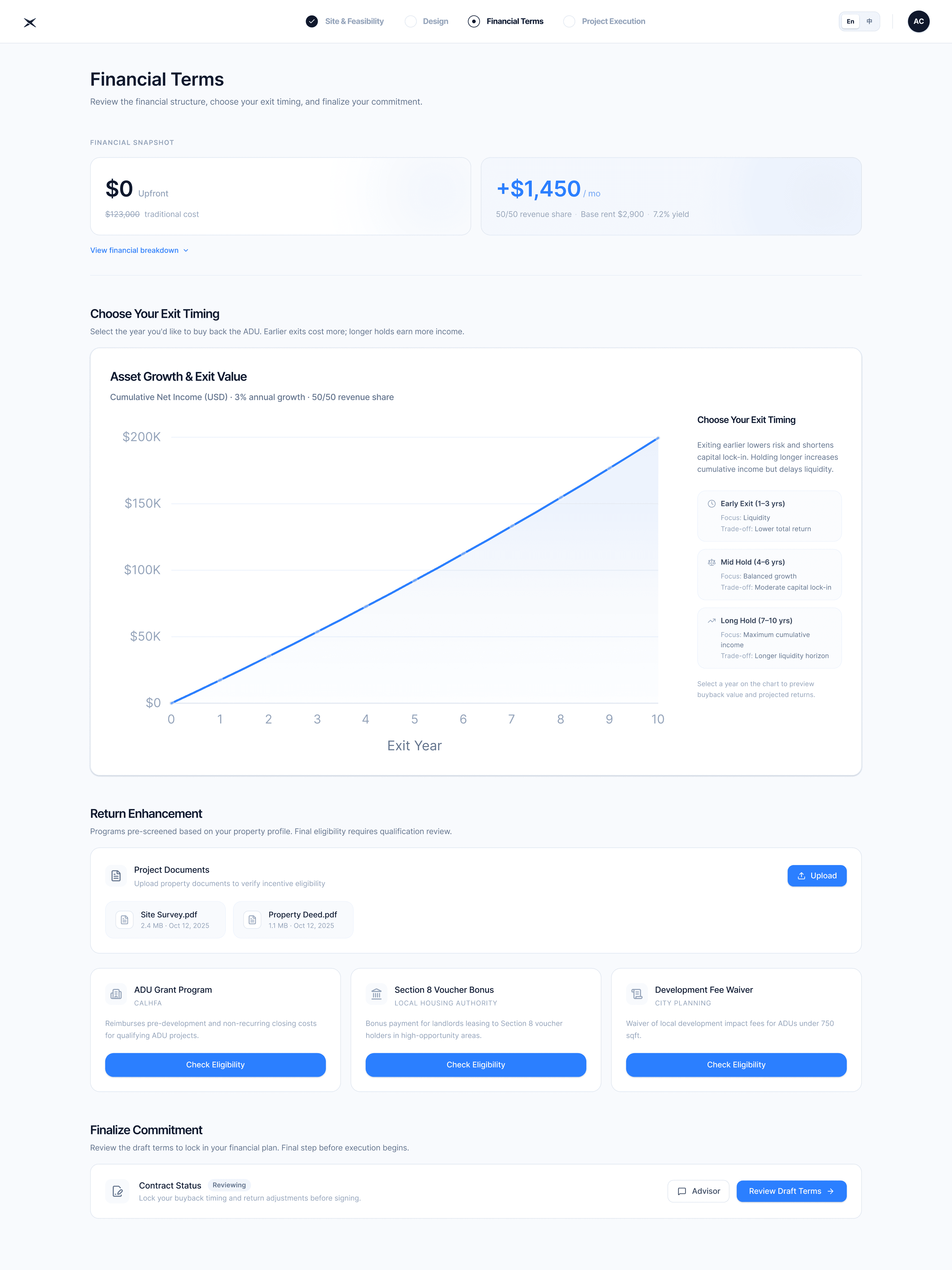
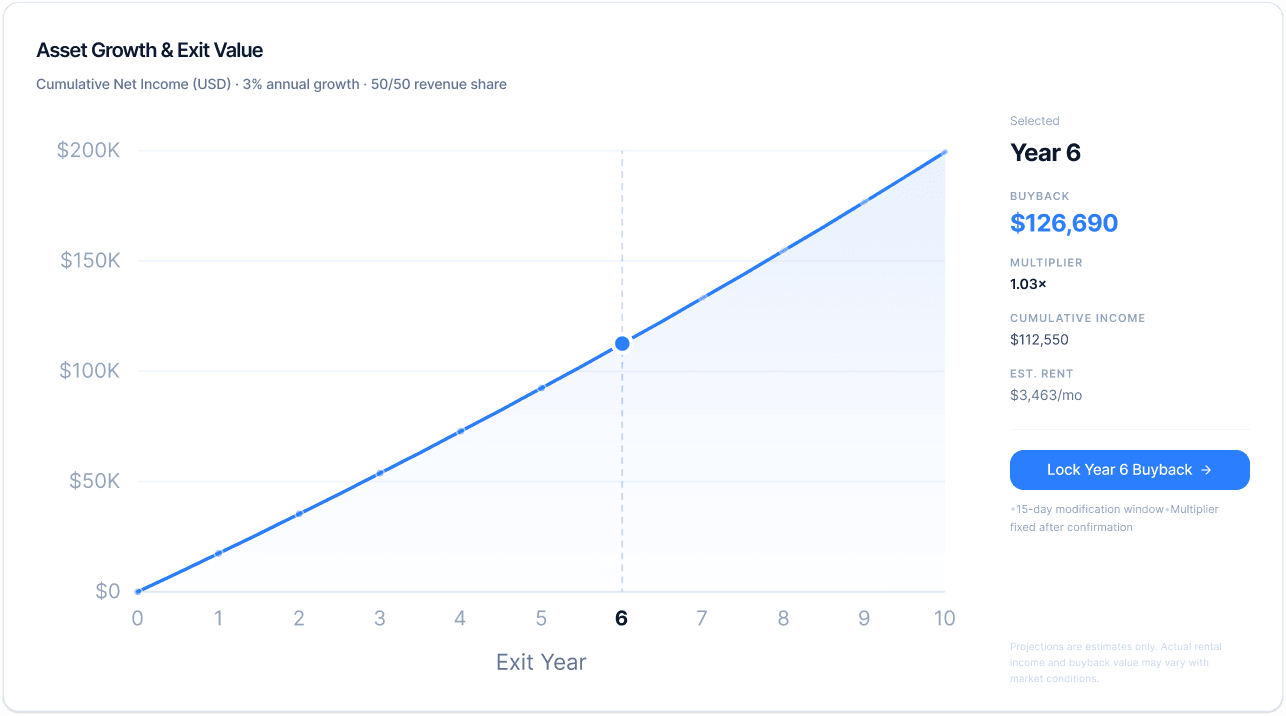
04 Financial Viability
Structured Financial Modeling
XXX
03 Configuration
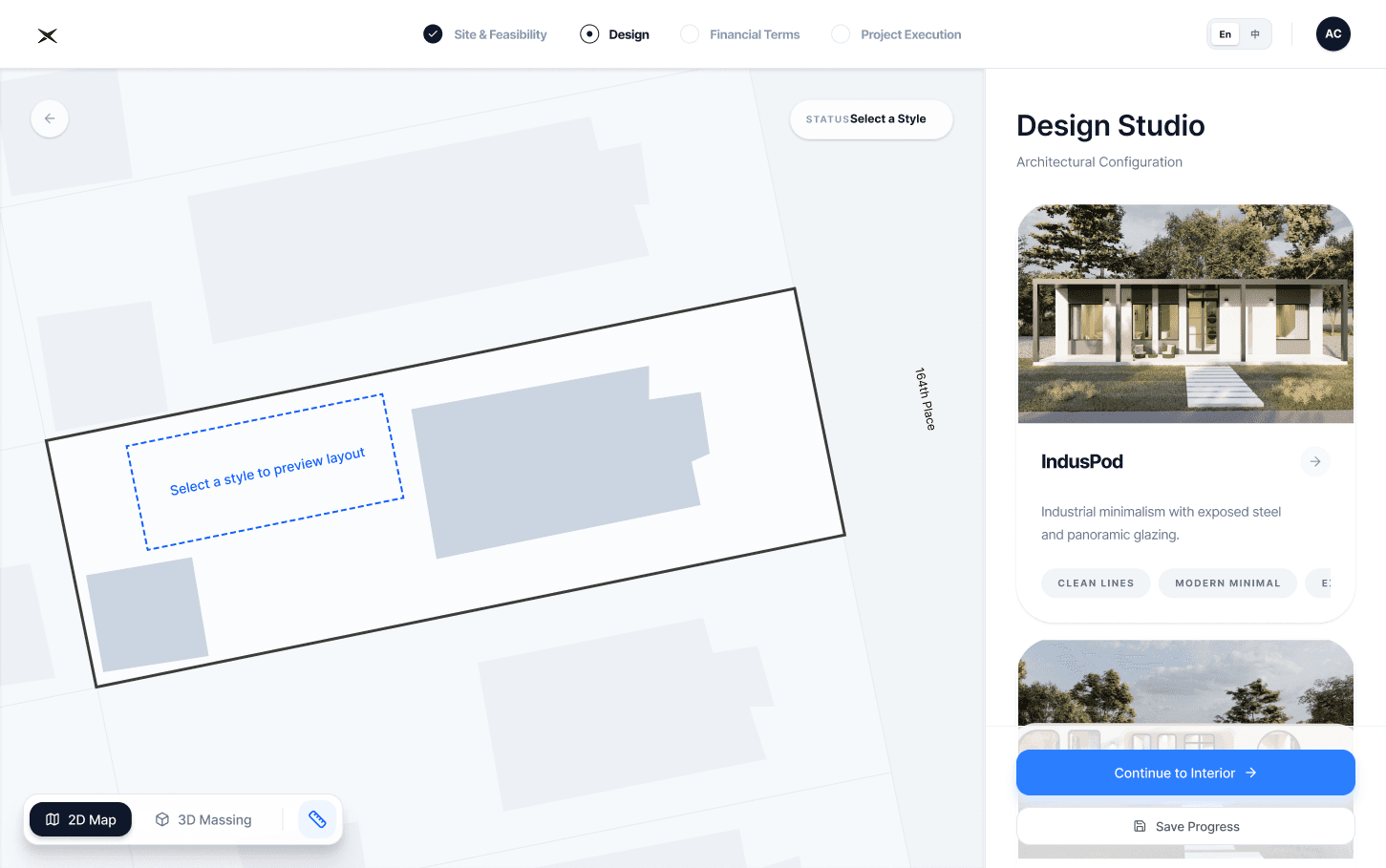


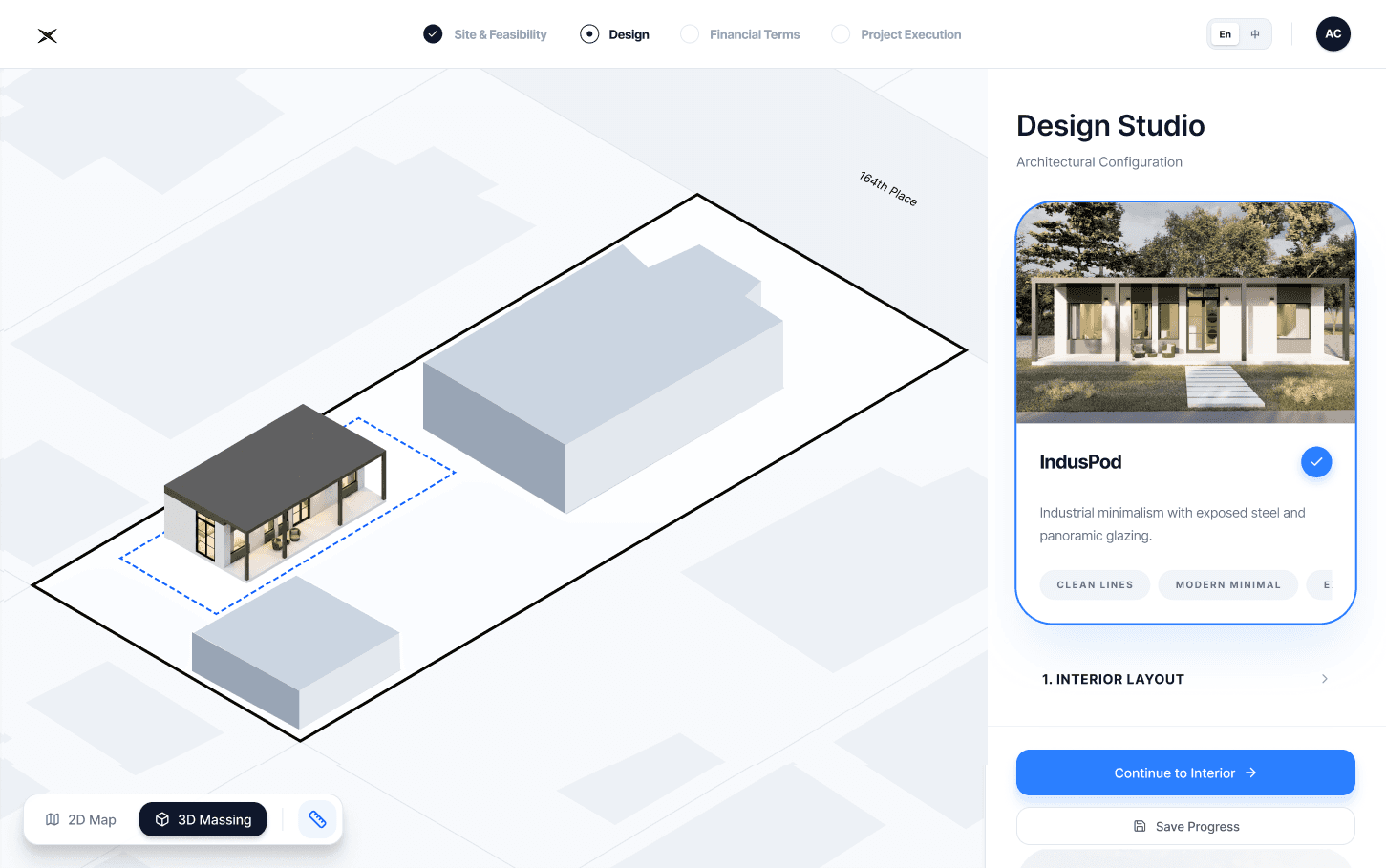
Unselected State: No default style. Users must make an intentional selection.
Selected State: Selection triggers a contextual 3D preview with immediate spatial feedback.
Layer Toggle: The Exterior / Interior switch adjusts the information hierarchy. Exterior preserves architectural context; Interior reveals spatial layout.
Real-Time 3D
Design updates instantly. Materials, layout and form respond in real time.
Dynamic Cost Engine
Every change recalculates cost. Selections and budget remain aligned.
Room-by Room Navigation:
Move through rooms with contextual detail
Commit With Confidence
Save the state, Reserve the model
State-based Interaction
Interior Design Studio

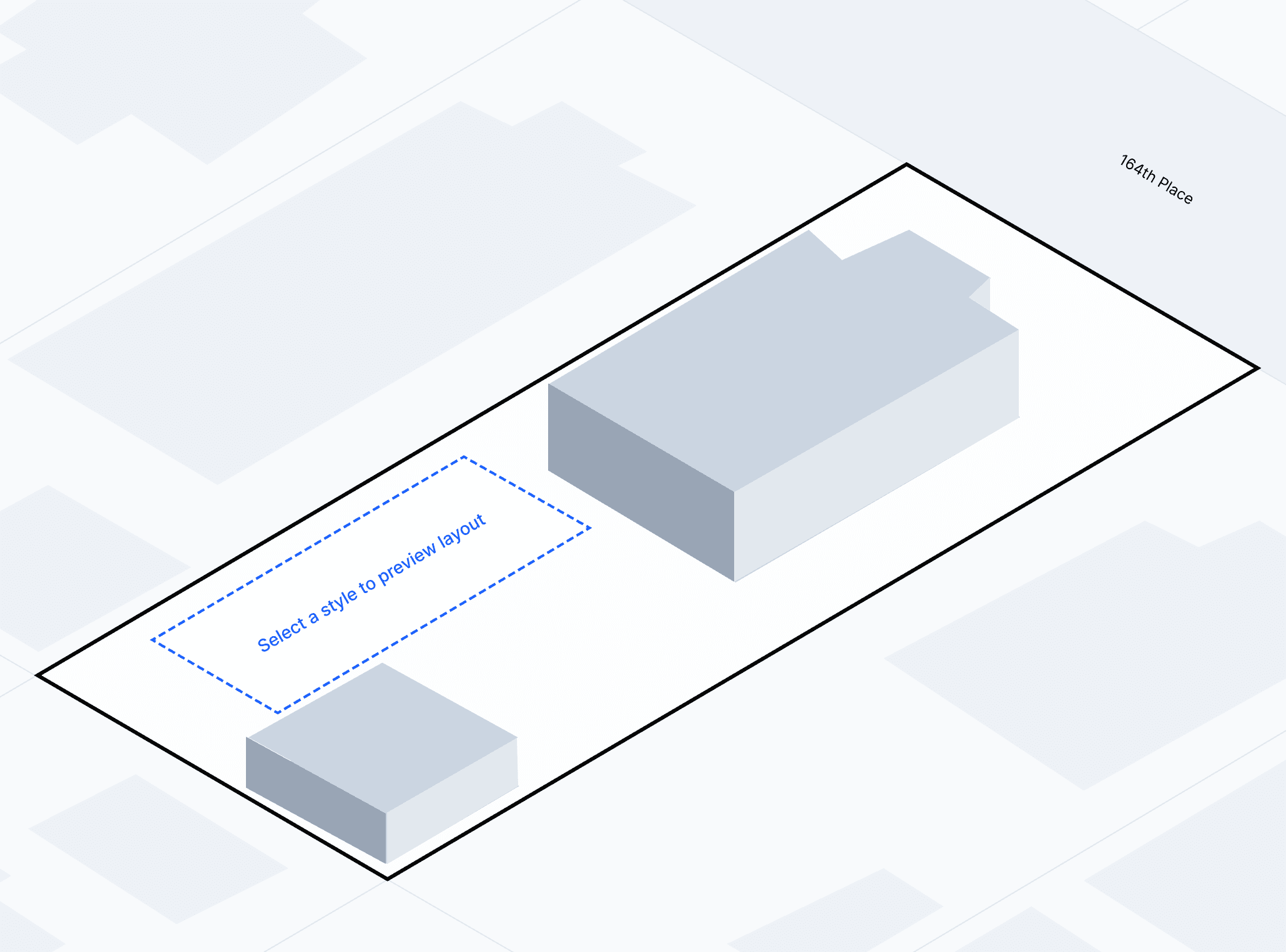
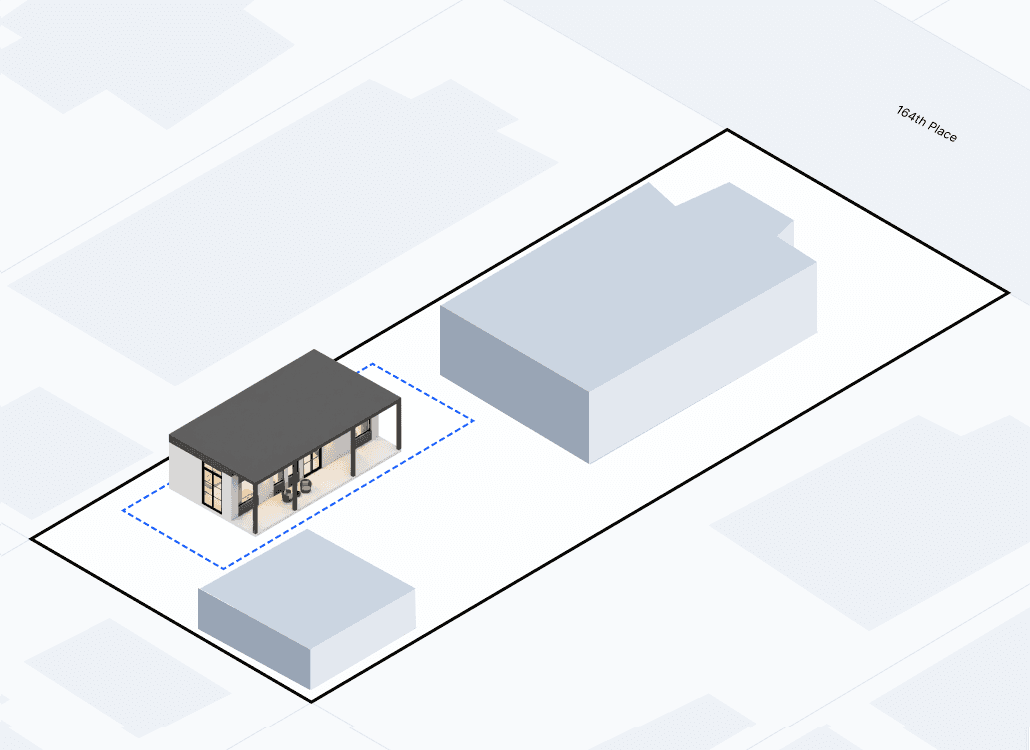
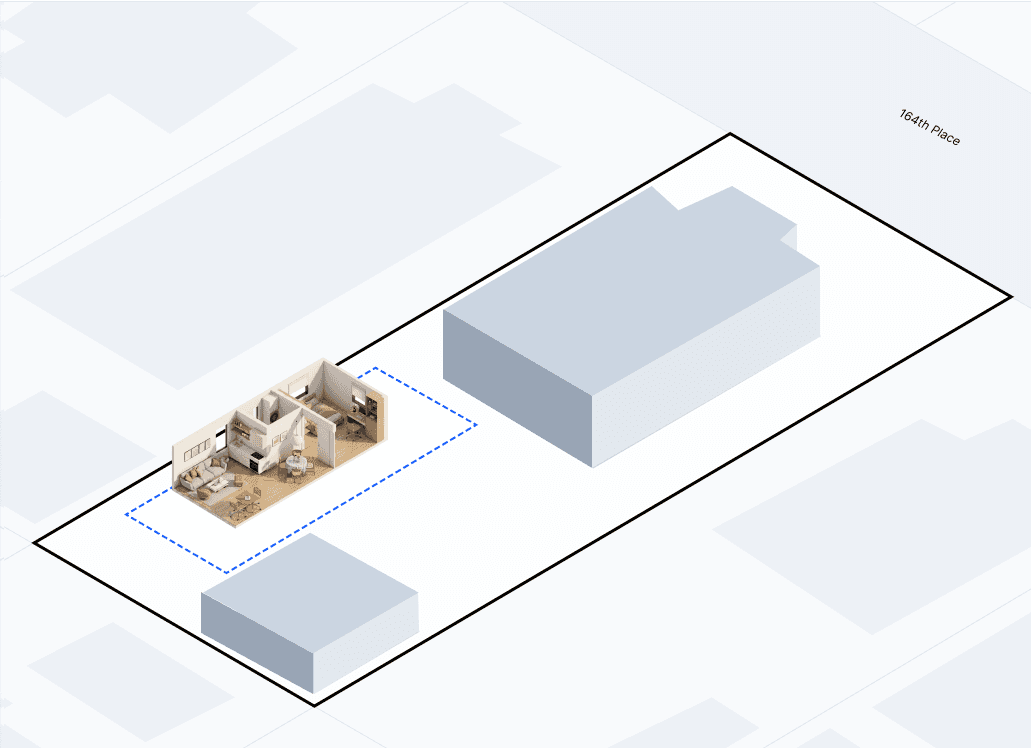
Unselected State
Selected State
Interior Switch
Structured Spatial Configurator
While traditional configurators optimize for visual expression, this system integrates regulatory compliance into the configuration logic.
Customization is layered as System Core (Prefab Structure); Surface Expression (Material & Finish) and Spatial Positioning (Within Envelope)
Zoning Intelligence
The system defines a compliant buildable envelope based on zoning and lot constraints.
Within this boundary, users can drag and rotate the ADU, exploring placement freely, without violating regulations.
Defined limits.
Controlled flexibility.
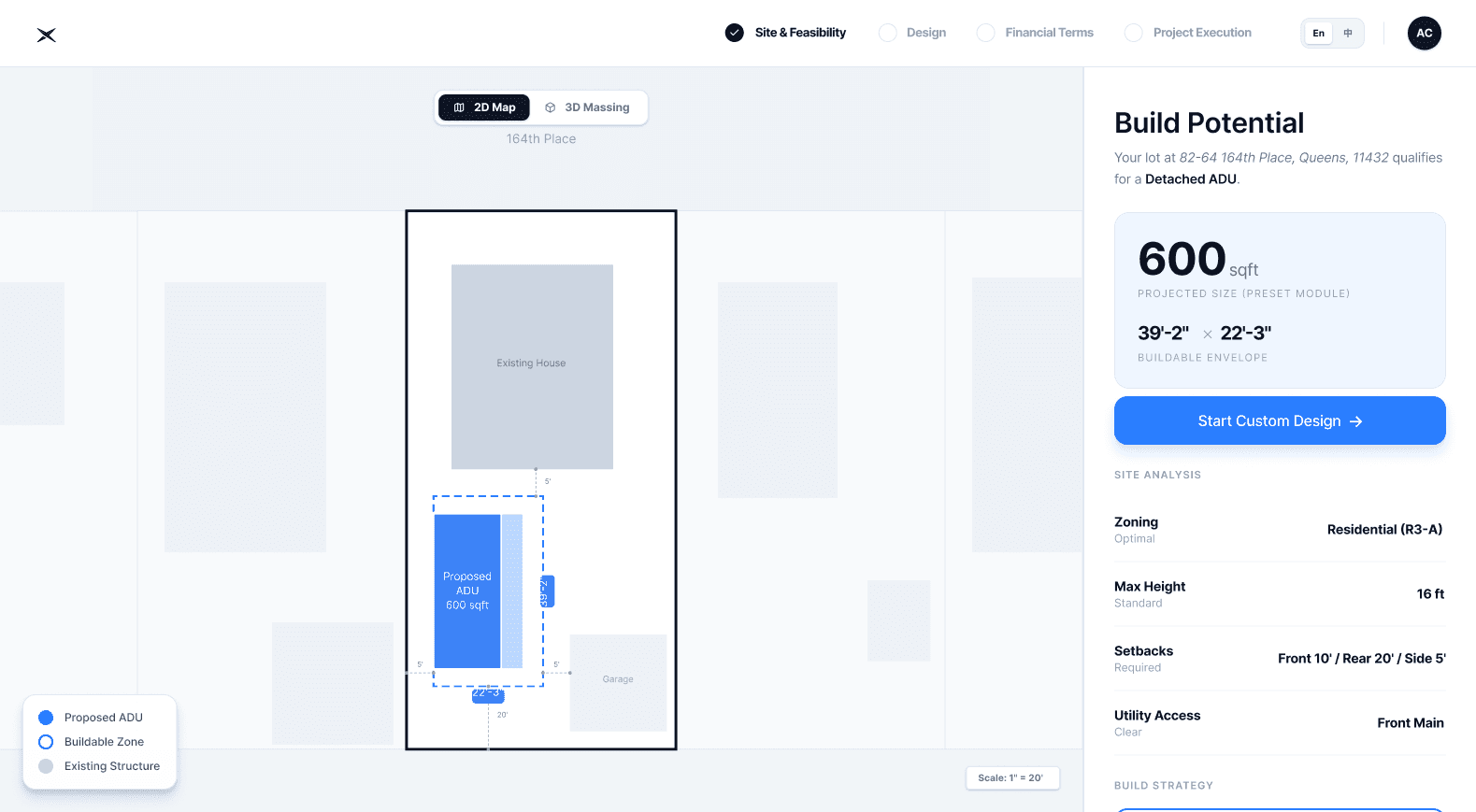
AI-Assisted Feasibility
The system interprets zoning and coverage constraints before presenting outcomes.
Users do not decode regulations, they receive structured eligibility states.
• Path Allocation
• Review State
• Coverage Boundary
Clear outcomes reduce uncertainty.

02 Eligibility
01 Discovery

Discovery is not a single page.
It is a layered orientation system.
Before entering structured validation, users need clarity across four dimensions: Models, How It Works, How You Earn, About XBuild.
Together, these layers reduce ambiguity before commitment.


Landing Page
Outcome-first messaging
Immediate contextual action
Scale & credibility signal
Secondary Navigation
These navigational links provide contextual reassurance for users who need additional clarity before initiating address validation.
Single-input entry lowers friction
Context before complexity
Passive interest into structured validation
Address Check
User Interfaces
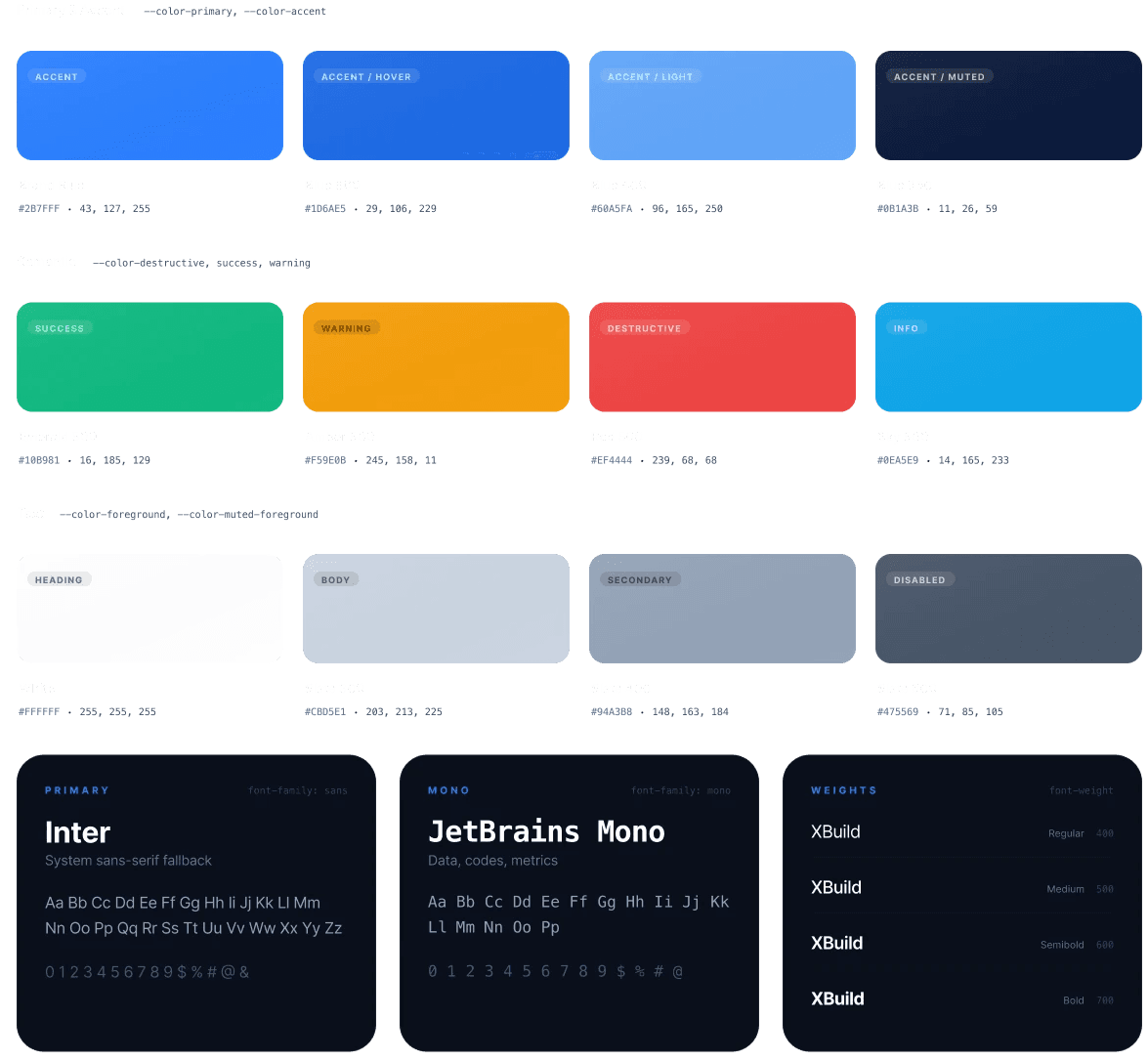
UI Kit